
If you’ve ever searched for ways to reduce noise at home or in the office, you’ve likely come across two terms used interchangeably: soundproofing and sound absorption. While they’re related to acoustics, they solve completely different problems.
Understanding the difference is critical before investing in panels, insulation, or wall treatments. Otherwise, you might spend money on products that don’t actually fix your noise issue.
Let’s break down what each one does, and what truly works for your situation.
What Is Soundproofing?
Soundproofing is about blocking sound from entering or leaving a room.
Its goal is isolation.
For example:
- Preventing neighbor noise from coming into your apartment
- Stopping music from escaping a home studio
- Reducing traffic noise from outside
Soundproofing works by adding mass, density, and airtight construction to prevent sound waves from traveling through walls, ceilings, floors, and gaps.
Common Soundproofing Materials
- Mass loaded vinyl (MLV)
- Double drywall with damping compound
- Acoustic insulation inside wall cavities
- Solid core doors
- Sealed door sweeps and window gaps
True soundproofing often requires construction work. It’s not just a decorative add-on, it’s a structural upgrade.
What Is Sound Absorption?
Sound absorption improves how sound behaves inside a room. It involves using soft, porous materials to soak up sound waves so they don’t bounce back off hard surfaces. Think of a rubber ball: if you throw it at a concrete wall, it bounces back (echo). If you throw it into a pile of pillows, it stops (absorption).
Instead of blocking noise, it reduces echo, reverberation, harsh reflections, and muddled speech. Absorption makes conversations clearer, music more balanced, and rooms more acoustically comfortable.
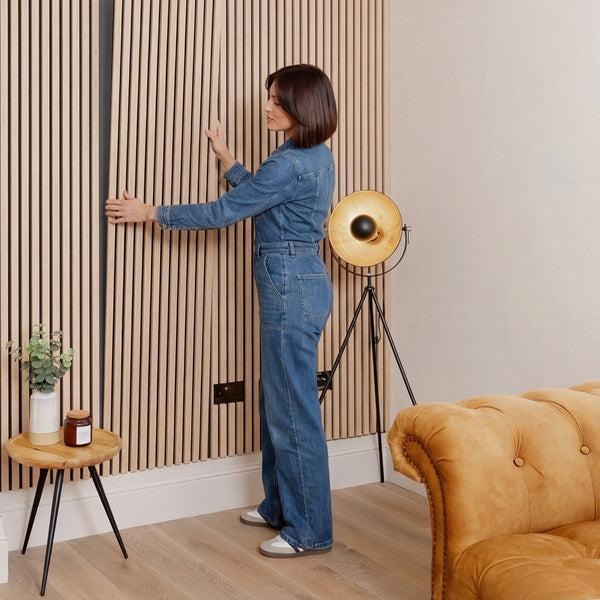
- Materials: Acoustic foam, fabric-wrapped fiberglass, felt-backed wood slats (like those from The Panel Hub), and heavy curtains.
- What it does: Makes speech clearer, music crisper, and reduces that “hollow” ringing sound in empty rooms.
- What it DOES NOT do: It will not stop your neighbor’s loud bass or a barking dog from entering your room.
Common Sound Absorbing Materials
- Acoustic foam panels
- Fabric-wrapped mineral wool panels
- Polyester fiber boards
- Wood slat wall panels with felt backing
- Ceiling baffles and clouds
Absorption works by trapping sound energy and converting it into small amounts of heat, preventing it from bouncing repeatedly around the room.
Which One Works for Apartments?
In most apartment settings:
- Complete soundproofing is expensive and often not renter-friendly.
- Sound absorption is realistic, affordable, and easy to install.
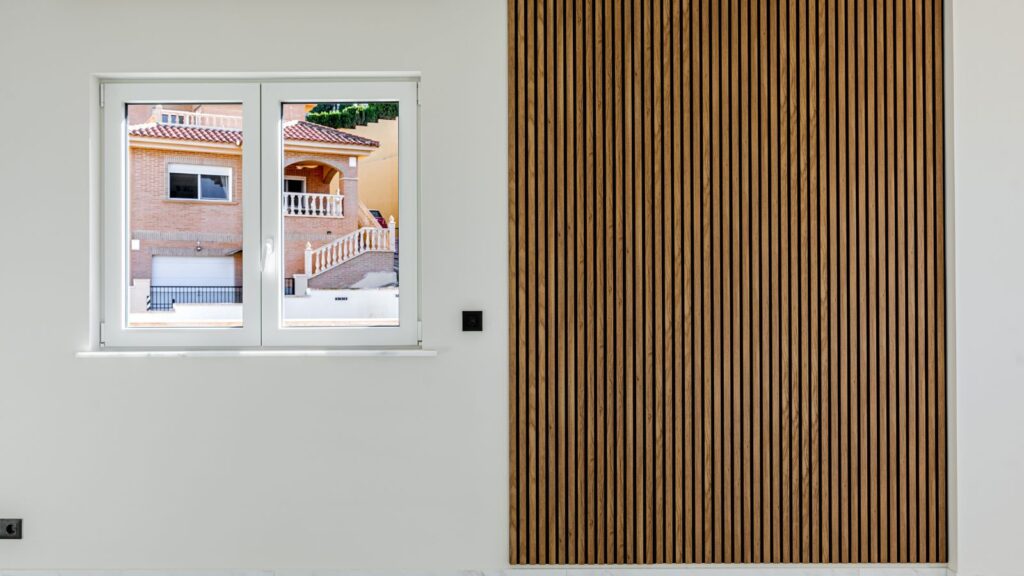
While absorption won’t eliminate external noise, acoustic wood wall panels that absorb noise can make your apartment feel noticeably quieter by reducing reflected sound energy. When echo decreases, overall sound intensity feels lower and more controlled.
Strategic panel placement can dramatically improve acoustic comfort, such as behind TVs, desks, or on large bare walls.
Why Acoustic Wood Wall Panels Are Popular
Modern acoustic wood wall panels combine decorative design with functional absorption.
They:
- Add texture and architectural depth
- Reduce echo and improve clarity
- Maintain a warm, luxury aesthetic
- Install directly onto existing walls
Unlike foam panels that can look temporary or studio-like, wood slat panels blend seamlessly into living rooms, bedrooms, and offices.