Table of Contents
ToggleOpen-plan living asks more of every design choice. When walls are reduced and rooms flow into one another, details that might go unnoticed in a smaller, more segmented layout suddenly carry more visual weight. A door handle is one of those details.
In a traditional home, door hardware often reads as a background feature. In an open-plan setting, though, it becomes part of the wider composition. You’re no longer looking at isolated rooms with their own finishes and focal points. You’re seeing a connected space where consistency, contrast, and visual rhythm matter far more. That’s exactly why black door handles tend to work so well.
They offer definition without fuss, character without ornament, and a kind of quiet structure that open spaces often need.
Contents
Open-Plan Homes Need Visual Cohesion
One of the biggest challenges in open-plan design is making a space feel connected without letting it become bland. When the kitchen, dining area, hallway, and living space are all visible at once, the eye naturally searches for repeated elements that tie everything together.
Black hardware does that elegantly. It creates a thread that runs through the home, even when materials and colours shift from one zone to another. You might have warm timber flooring in the dining area, painted cabinetry in the kitchen, and a softer palette in the lounge. Black handles can sit comfortably across all of those surfaces, acting as a small but effective unifier.
This works because black has a unique design advantage: it behaves almost like a neutral, but with more presence than chrome, brushed steel, or white-painted fittings. It doesn’t disappear entirely, yet it rarely clashes. In open-plan homes, where continuity matters, that balance is incredibly useful.
They Add Definition in Spaces With Fewer Boundaries
Open layouts remove physical barriers, but that can sometimes make a home feel visually loose. Without clear boundaries, the space risks lacking punctuation. Black door handles help provide some of that.
Think of them as subtle markers. Against white or light-coloured doors, they create contrast and signal transitions between one area and the next. On darker doors, they add texture and depth rather than obvious contrast. Either way, they help doors feel intentional rather than purely functional.
That matters more than people often realise. In an open-plan home, doors to utility rooms, pantries, cloakrooms, studies, and side entrances are often visible from the main living space. Their hardware contributes to the overall look whether you focus on it or not. Choosing a finish with enough visual clarity to hold its own can make the whole interior feel more considered.
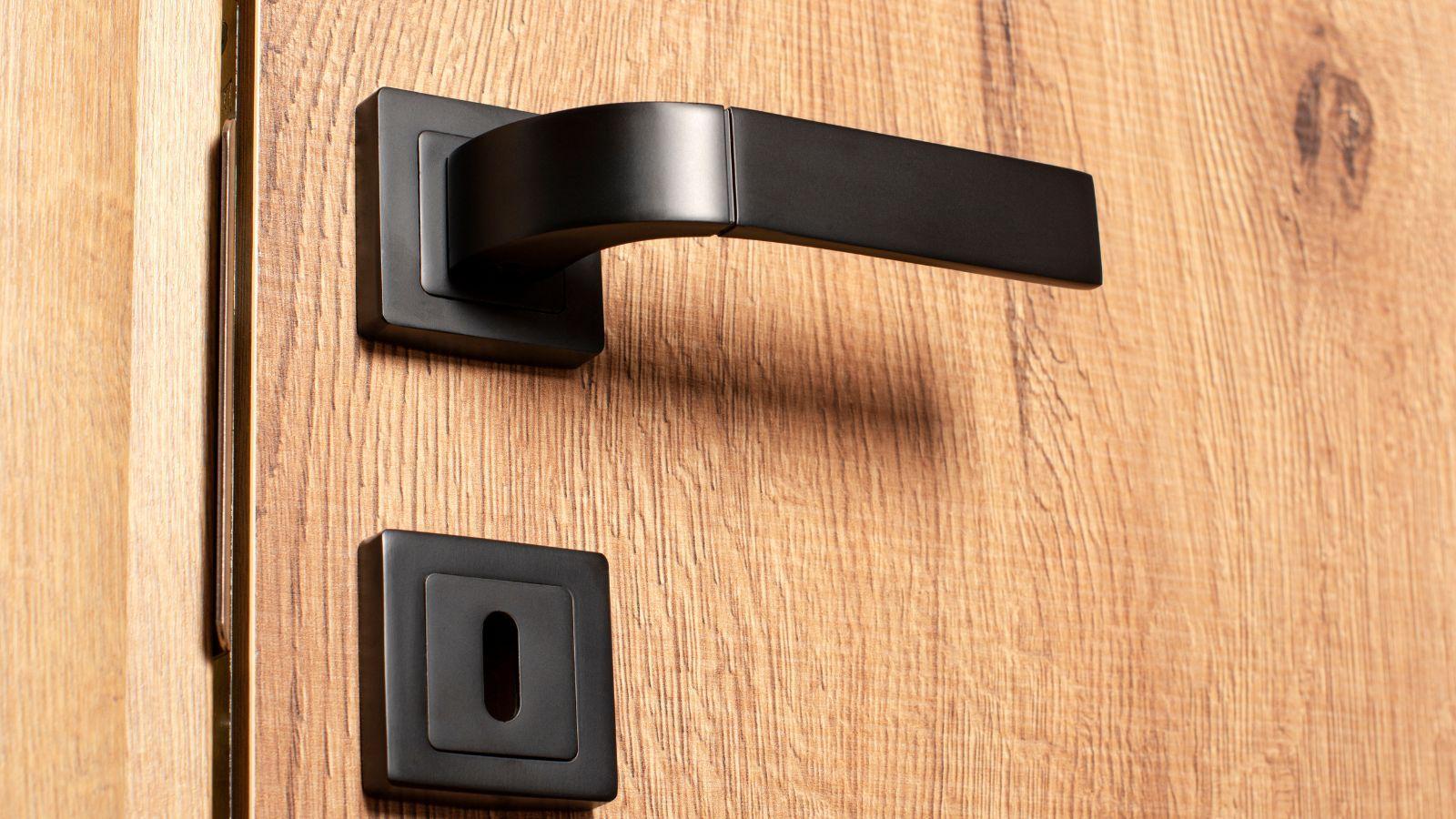
For homeowners exploring options, seeing how different shapes and finishes are used across various interior styles can be helpful. A well-curated premium matte black door handle collection shows just how adaptable the finish can be, from minimalist lever handles to more traditional forms that still suit modern layouts.
Black Handles Work Across Multiple Design Styles
Another reason black door handles shine in open-plan homes is their flexibility. Open-plan spaces often blend influences rather than sticking rigidly to one aesthetic. A home might combine industrial lighting, shaker cabinetry, soft contemporary furniture, and period architectural features all in the same line of sight.
Black hardware can bridge those differences.
In modern interiors
In contemporary schemes, black handles reinforce clean lines and crisp contrasts. They pair naturally with slim-framed glazing, monochrome palettes, stone surfaces, and minimalist joinery. The result feels deliberate rather than decorative.
In warmer, softer spaces
Black also works surprisingly well in homes that lean more natural or relaxed. Pair it with oak, linen tones, limewashed walls, or muted greens, and it adds just enough edge to keep the space from feeling washed out. Open-plan homes often need that tension between softness and structure.
In period-meets-modern renovations
This may be where black handles are most effective. Many open-plan homes are created by renovating older properties—removing internal walls, adding rear extensions, and opening sightlines while preserving original character elsewhere. Black hardware can sit comfortably between old and new. It feels current, but not so stark that it jars with traditional details.
They Create Rhythm Through Repetition
In design, repetition is what helps a large space feel coherent. You see it in matching light fittings, recurring timber tones, or repeated fabric textures. Door handles can play the same role.
When black handles are repeated across internal doors, glazed partitions, storage cupboards, and even complementary hardware like cabinet pulls or window fittings, they create rhythm. Your eye picks up the repetition almost subconsciously, and the home feels more unified as a result.
That’s particularly valuable in open-plan homes because there are fewer walls to organise the experience of moving through the space. Repeated details step in to do some of that work instead.
Practical Benefits Matter Too
A good finish has to do more than look right. Open-plan living tends to mean heavy daily use. Doors between busy family areas, utility spaces, gardens, and home offices are touched constantly, and hardware needs to stand up to that.
Matte black finishes often perform well here for a few reasons:
- They tend to hide minor smudges and water marks better than polished finishes.
- They feel more contemporary over time than trend-led metallics that can date quickly.
- They work well with a wide range of paint colours and materials, making future updates easier.
Of course, not all black finishes are equal. Texture, durability, and the quality of the coating matter. In a busy open-plan home, a soft, chalky matte can look sophisticated, but only if it’s built to handle repeated use.
The Best Effect Comes From Restraint
There’s a temptation, when a finish works well, to carry it everywhere without pause. But the strongest interiors are usually more measured than that.
Black door handles are most effective when they feel intentional rather than over-applied. In open-plan homes, that might mean repeating them on visible internal doors and key transition points, while balancing them with softer finishes elsewhere. Too much black without enough warmth can make a space feel hard. Used thoughtfully, though, black handles can sharpen the design without overwhelming it.
That restraint is what gives them longevity. They don’t need to dominate the room to improve it.
A Small Detail That Makes a Large Space Feel Resolved
Open-plan homes succeed when they feel connected, balanced, and easy to read. That rarely comes down to one dramatic feature. More often, it’s the smaller choices—the ones repeated quietly across the space—that make the difference.
Black door handles are a good example. They bring cohesion where layouts are expansive, definition where boundaries are reduced, and character without visual noise. They work across styles, hold up well in daily life, and help open-plan interiors feel finished in a way that brighter or less defined hardware often doesn’t.
It’s a small decision on paper. In practice, in a home where everything is visible at once, it can have a surprisingly large effect.