
Table of Contents
ToggleA productive dairy farm depends on more than good equipment or a large herd. Its layout, cleanliness, and daily routines all influence animal welfare, milk quality, and the time workers spend on routine tasks.
A well-organized operation makes essential care easier to deliver consistently, whether the farm houses a few dozen cows or several hundred.
Here are 11 features worth prioritizing when planning or improving dairy facilities.
Contents
1. A Layout That Supports Smooth Movement
Separate routes for feeding, milking, manure removal, and animal movement wherever practical. Wide, unobstructed walkways help workers operate safely and reduce unnecessary handling.
Position frequently used supplies close to the tasks they support, but keep chemicals and dirty equipment away from feed and milk-handling areas. A simple site map can reveal unnecessary crossings and bottlenecks.
2. Comfortable, Dry Resting Spaces
Cows need sufficient room to lie down, rise naturally, and rest without interference. Properly sized stalls with suitable bedding support comfort, while frequent bedding maintenance keeps resting surfaces dry.
Check for worn mats, sharp edges, and wet patches instead of assuming that a clean-looking barn is comfortable. Awkward movements when rising may indicate stall-design problems.
3. A Hygienic Milking Area
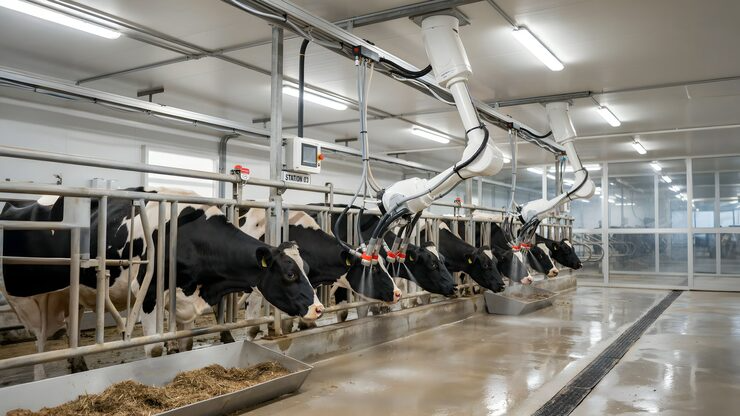
A milking area should have washable surfaces, good lighting, reliable drainage, and equipment that staff can inspect easily.
Follow documented teat-preparation and milking-equipment cleaning routines. Clean milk-handling spaces and well-maintained liners and hoses reduce avoidable hygiene risks and help employees notice faults before they disrupt milking.
Post-cleaning instructions for staff using the equipment.
4. Reliable Ventilation and Cooling
Fresh air helps control moisture and stale air, while adequate air movement is especially important during hot weather.
Properly positioned barn fans can improve airflow over adult cows, but they must work with suitable inlets and an effective ventilation system.
Check for still corners, dirty fan guards, and drafts affecting young calves. Panting and crowding can signal that cooling needs attention.
5. Dedicated Housing for Young Calves
Calves have different housing needs from mature cattle. Well-designed calf pens should provide enough room to move and rest, easy feeding access, and surfaces that can be cleaned between occupants.
Keep bedding dry and maintain fresh air without directing cold drafts across calves. Arrange pens so caregivers can observe appetite and behaviour daily. Follow local calf-grouping and welfare requirements.
6. Accessible, Clean Drinking Water
Dairy cattle need dependable access to water throughout the day, particularly after milking and feeding.
Position cattle waterers where animals can drink without blocking busy passages. Check refill rates, remove feed and manure contamination, and inspect equipment for leaks or freezing.
Multiple drinking locations can help limit competition within groups. Keep water points away from bedding to prevent spills soaking resting areas.
7. Organized Feed Storage and Delivery
Store forage and concentrates in areas protected from rain, pests, and avoidable contamination. Label feed supplies and keep delivery routes clear.
Regularly remove spoiled leftovers from feed bunks, monitor whether all animals can reach feed, and review rations with a qualified nutrition adviser as herd needs change.
8. Safe Floors and Effective Drainage
Slippery surfaces increase the risk of falls for both cattle and workers. Use appropriate non-slip flooring and maintain grooves or textured finishes where needed.
Floors should drain toward designated channels rather than collecting water beside resting areas. Repair broken concrete and blocked drains promptly. Check high-traffic crossings and milking exits for worn surfaces.
9. Practical Handling and Health-Check Areas
Safe handling facilities make vaccinations, hoof care, examinations, and animal separation less stressful.
Provide secure gates, adequate lighting, and a suitable restraint area. Set aside clean accommodation for animals needing closer observation, following veterinary advice and biosecurity procedures to reduce disease transmission.
10. A Manageable Manure and Waste System
Regular manure removal helps maintain clean walking surfaces and reduces exposure to waste.
Design scraping routes and storage areas to avoid contamination of feed, water, and waterways. Keep drainage and storage capacity suitable for seasonal conditions, and follow applicable environmental rules for manure handling and application.
11. Clear Maintenance Routines and Records
Even well-designed facilities underperform without regular checks. Use simple schedules for cleaning, fan maintenance, water testing, machinery inspections, and bedding replacement.
Record treatments, equipment faults, and recurring problems so staff can identify patterns. Clear task ownership helps prevent small issues from becoming costly disruptions.
Conclusion
An efficient dairy farm brings animal needs and practical work routines together. Clean resting spaces, ventilation, calf accommodation, reliable water access, and thoughtful maintenance reinforce one another.
Farmers do not need to overhaul every building at once. Identifying the biggest welfare and workflow problems provides a sensible starting point for steady improvements.