
Table of Contents
ToggleWe have officially reached the saturation point of the “frozen face” era. For the last decade, the beauty industry convinced us that the only way to age gracefully was to paralyze our muscles and peel off our epidermis with industrial-strength acids. But walk into any high-end wellness clinic in 2026, and you will notice a distinct shift in the air. The smell of burning chemicals has been replaced by the scent of organic wildcrafted oils. This isn’t just a vibe shift; it is a market correction. Aspiring aestheticians are flooding into facial course programs that prioritize holistic biology over technological aggression. It appears that the smartest career move this year is enrolling in a facial course that teaches you how to work with the skin’s physiology rather than declaring war on it.
Contents
The “Gardener vs. Mechanic” Analogy
To understand this pivot, you have to look at how we treat the body. Traditional aesthetics often treats the face like a broken car part that needs to be sanded down and repainted. It is a mechanical approach. The new wave of natural aesthetics treats the face like a garden. You don’t dump bleach on a rosebush to make it bloom; you nourish the soil.
This philosophy is driving the curriculum changes we see today. Students are no longer satisfied with just learning how to operate a laser machine. They want to understand the lymphatic system, the fascia, and the microbiome. They realize that a machine can break, but your hands are tools that only get better with experience. A comprehensive facial course curriculum now includes modules on connective tissue massage and internal wellness, bridging the gap between a beauty treatment and a health intervention.
The Rise of “High-Touch” Modalities
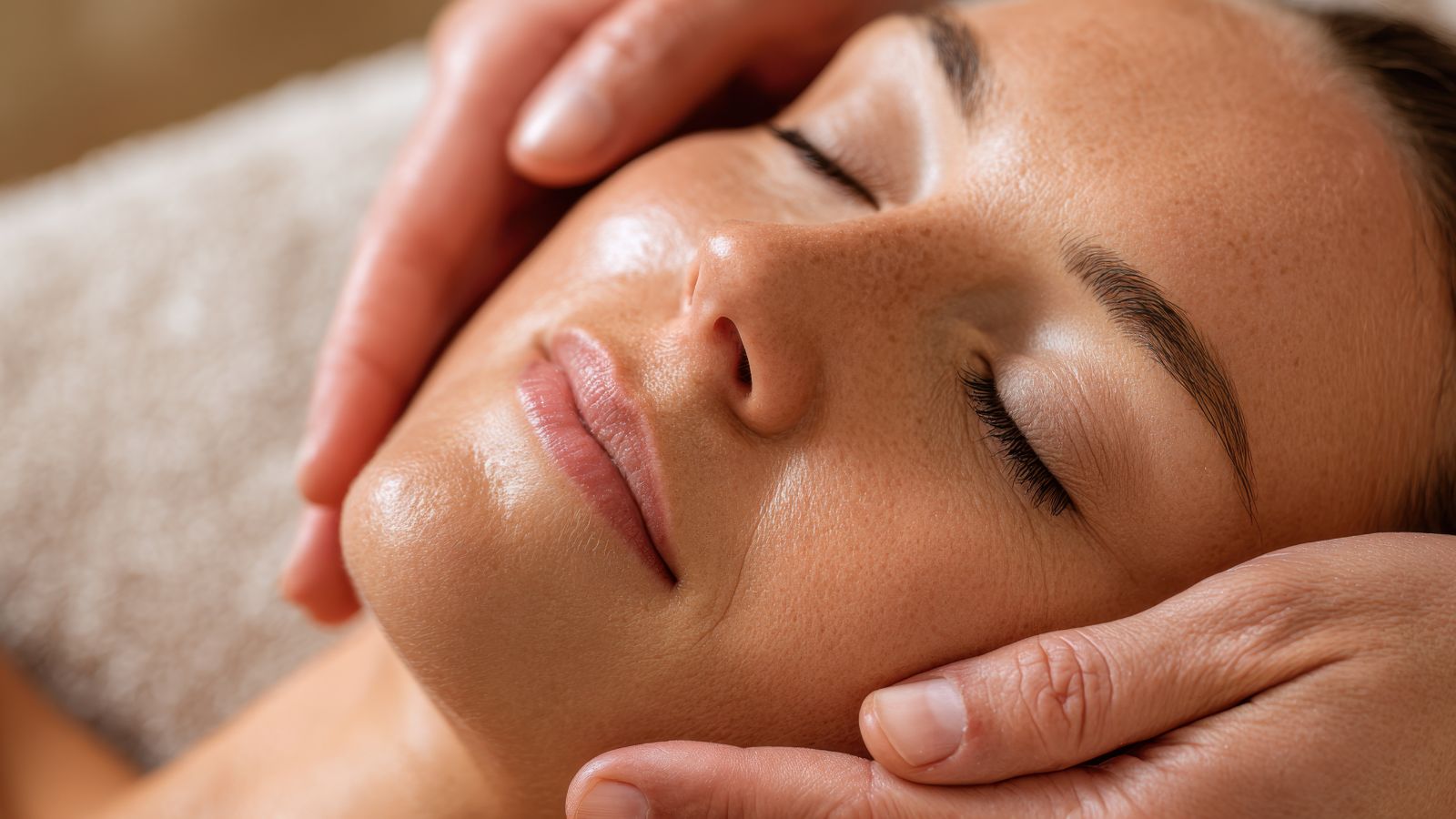
In a world that is becoming increasingly digital and disconnected, the value of human touch has skyrocketed. We are seeing a massive consumer demand for treatments like Buccal massage (internal mouth massage) and manual lymphatic drainage. These aren’t things you can automate. They require an intuitive understanding of anatomy that can only be learned through rigorous, hands-on training.
The Longevity Pivot
The buzzword for 2026 isn’t “anti-aging” anymore; it is “longevity.” Clients don’t just want to look younger for a week; they want their skin to function better for a lifetime. This is where the natural approach wins. Chemical peels thin the skin over time, potentially accelerating aging if overused. Conversely, techniques like facial reflexology and gua sha increase circulation and collagen production naturally, thickening the dermis.
Leading beauty authorities at Vogue Scandinavia confirm that the future of skincare is blending with overall wellness, noting that manual techniques are gaining global momentum as effective alternatives to invasive procedures. This validation from top-tier fashion press proves that “natural” is no longer niche; it is the new luxury.
Actionable Advice for Aspiring Healers
If you are looking to enter this booming field, do not just sign up for the first school that pops up on Google. You need to vet your education like you vet your supplements.
- Look for Anatomy: If the course doesn’t spend significant time on the muscular and skeletal systems of the head and neck, skip it. You cannot sculpt a face if you don’t know what lies beneath the skin.
- Check the Ingredients: A true natural course will teach you about ingredients, not just product lines. You should learn how to mix raw masks, not just how to open a packet.
- Verify the Hands-On Hours: You cannot learn pressure and flow from a Zoom call. Ensure the program requires extensive in-person practice hours.
The beauty industry is waking up. We are realizing that true radiance doesn’t come from a syringe; it comes from a healthy, supported system. By choosing an education that honors this truth, you aren’t just getting a certificate. You are future-proofing your career.