
Table of Contents
ToggleBuy the wrong heated toilet seat and it may not work in your bathroom at all, whether because of its shape or your electrical setup. Check the fixture and product specifications before ordering to avoid returns, improvised electrical work, and paying for functions your household will not use.
Contents
How heated seats and bidet functions work
How heated toilet seats work
The seat gets its warmth from an electric element. A bidet works differently: it sprays water to clean you after you use the toilet. You generally do not need to wipe beforehand. Afterward, you can use toilet paper or a built-in dryer.
Research cited by Health.com puts a single bidet wash at about one-eighth of a gallon of water. One roll of toilet paper, by contrast, takes roughly 36 gallons to produce.
Warm water compared with cold water
Warm water is mostly about comfort. Cold water cleans just as well. Tank models warm a limited reservoir, while tankless systems heat water during use.
Installation and everyday limitations
How to install a heated toilet seat
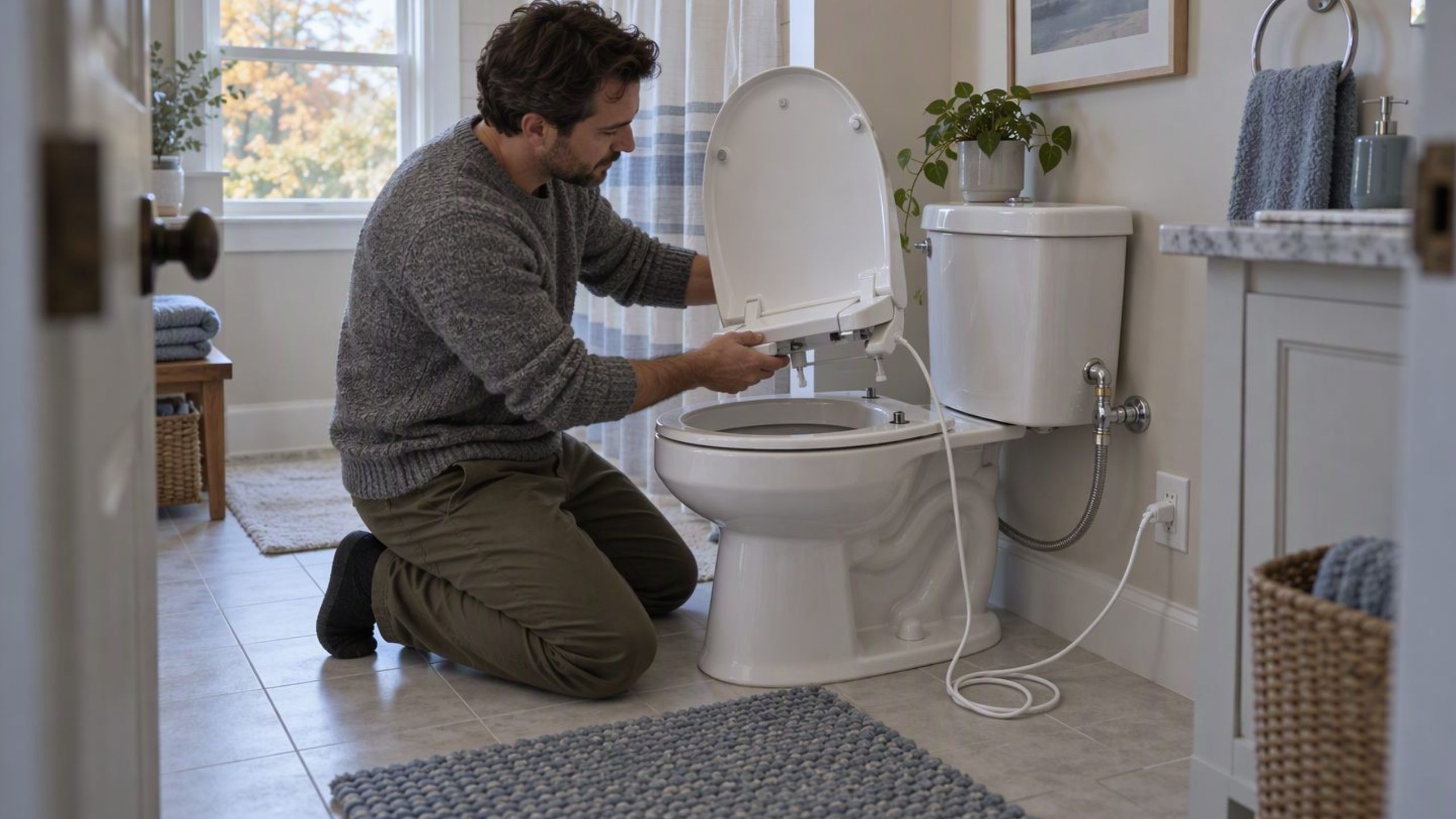
Before you remove the existing seat and secure the mounting plate, make sure everything fits. For a washing model, connect the water fitting, then plug the unit into the specified outlet according to its installation manual.
Installing a bidet with warm water
Electric models with internal water heating usually tap the toilet’s cold-water supply, not the sink’s hot-water line.
Outlet problems and other downsides
No suitable outlet nearby? That could mean hiring a licensed electrician. You will also need to clean around extra hardware and may pay for settings you do not use.
Final compatibility checklist for heated toilet seats
| Check | What the homeowner must confirm |
|---|---|
| 1. Identify the toilet shape | Is the toilet round or elongated? Find out first. Look for unusual curves, including French curve designs, and measure the clearance between the tank and mounting holes. A familiar bowl shape does not guarantee clearance for rear hardware. |
| 2. Measure the bowl | Measure from the mounting-hole centerline to the bowl’s front edge. Write down the hole spacing too. Then compare both numbers against the manufacturer’s heated toilet seat dimensions and fit guide rather than judging by appearance alone. |
| 3. Confirm electrical access | An electric heated seat needs an outlet. Check the voltage, cord length, plug position, and outlet instructions. Do not use an extension cord. |
| 4. Compare water-heating systems | Choose between limited stored warm water and on-demand heating based on your household’s typical bathroom use. |
| 5. Choose useful controls | For a heated toilet seat with temperature control, verify the available seat and water settings. Favor controls that household members can operate easily instead of paying for unnecessary comfort features. |
Once you know your bowl measurements, outlet situation, and water-heating preference, comparing Heated toilet seats is mostly a matter of matching each model’s fit guide and temperature range against those three answers. A seat is ready to order only when its measurements and electrical setup suit your bathroom, and its heating method and controls suit the people using it.