
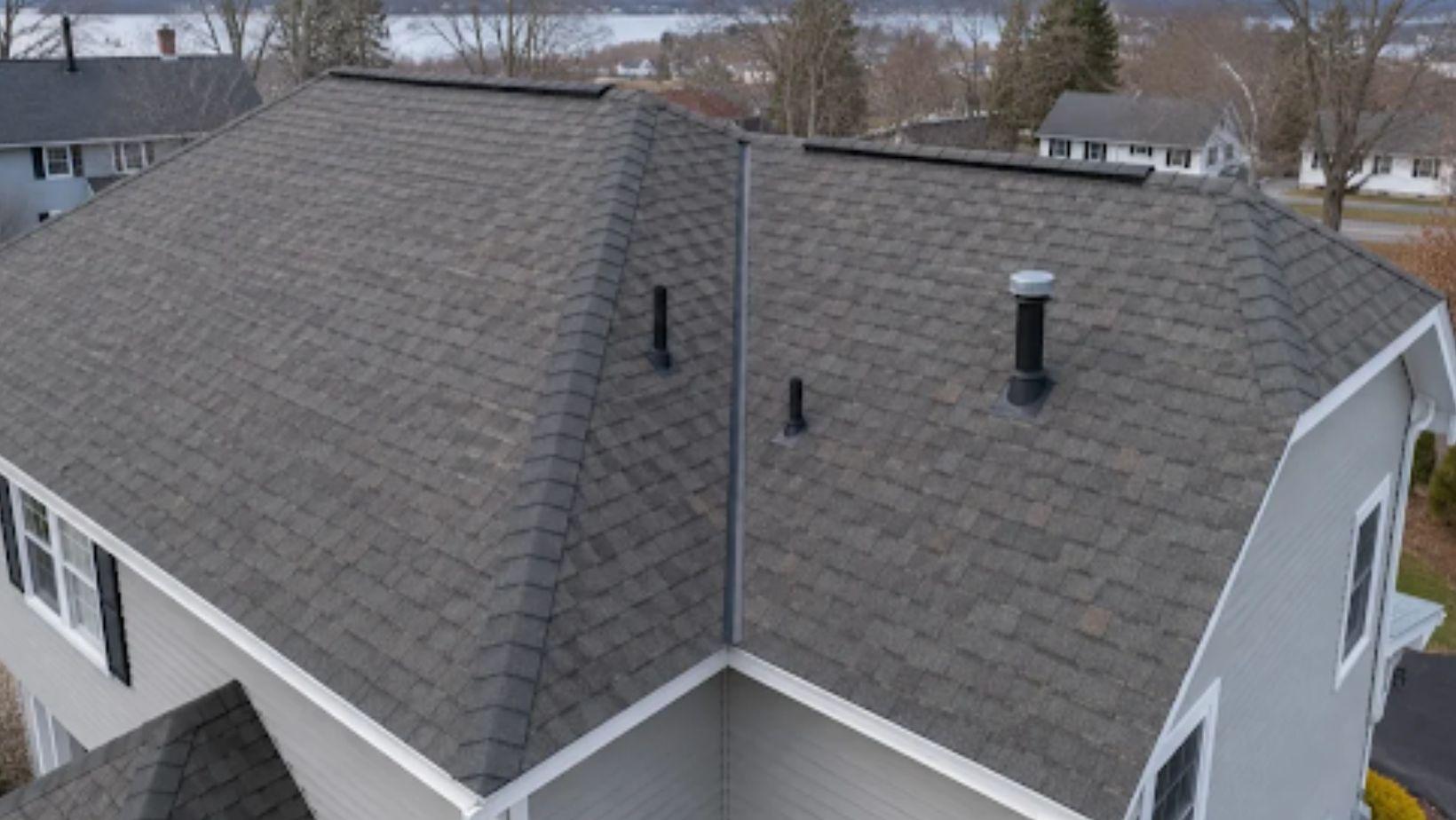
Most roof leaks begin when water gets in somewhere high, runs along the wood and the nails, before dripping down lower in your home. Finding a roof leak means working backwards. You start inside, follow the water upward, and check the spots that fail first. In New England, there’s one more suspect the national guides skip: ice dams at the edge of the roof.
If you need to act quickly, start in the attic with a flashlight and look for water stains, mold, or wet wood on the underside of the roof. Follow the trail uphill, because water always travels down before it drips. Then check the flashing, pipe boots, valleys, and skylights, since those leak long before the open shingles in the middle of the roof ever do.
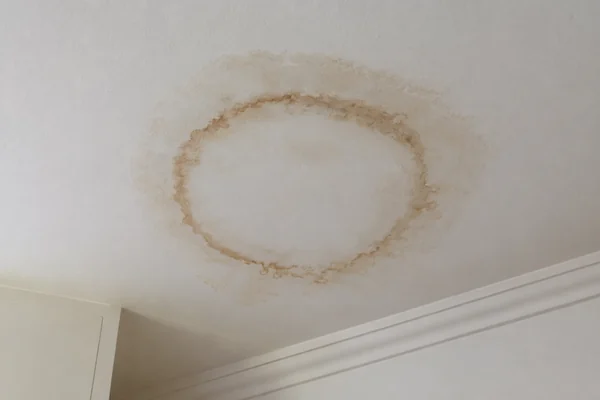
What does a roof leak look like from inside?
The first clue is usually a stain, a yellow or brown ring on the ceiling, paint that bubbles, drywall that feels soft, or a musty smell in a closet or upstairs room. However, not every water stain is a roof leak. A sweating cold-water pipe, a bathroom fan venting into the attic instead of outside, or plain condensation on poorly vented sheathing can leave the same marks.
If the “leak” shows up on dry, cold days and never during rain, you may be chasing moisture from inside the house, not water from the sky. Attic air sealing and better ventilation usually fix it, and University of Minnesota Extension publishes homeowner guidance on rain and moisture in the home. Rule that out and you save yourself a pointless trip up a ladder.

Where do roof leaks start?
Across the roofs we work on, the leak is almost always in the details, whether it’s the transitions, the seams, or something that pokes through the roof. The most common culprits, in the order we tend to find them, include the following:
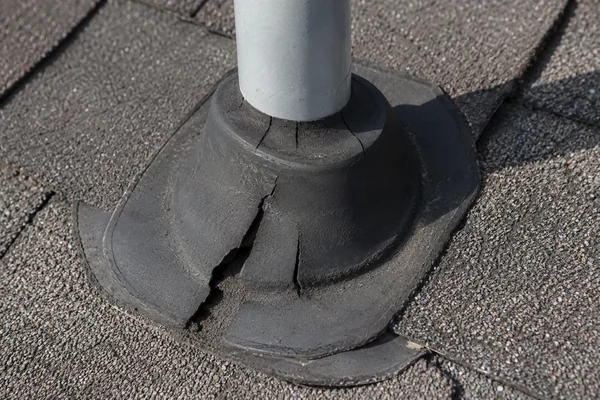
If I had to name the one thing homeowners never guess, it’s the pipe boot. That little rubber gasket has a shorter life than the shingles around it, and once it splits, water runs straight down the vent pipe into the ceiling below.
The second thing is a reused or sloppy prior install. A lot of the leaks I find trace back to a corner someone cut years ago, not to age. That’s also why chasing one stain with a tube of sealant usually fails. Fix the boot or the flashing, and you fix the leak. If you smear caulk over the drywall stain, you’ve just hidden it.
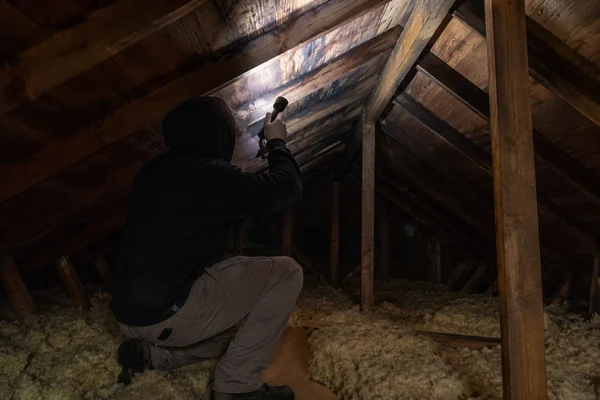
Start in the attic and trace the water uphill
If you can get into the attic, bring a flashlight and look at the underside of the roof deck. You’re hunting for dark water stains, damp or matted insulation, black mold spots, rusty nail tips, or wood that looks shiny and wet. Water leaves a trail, and that trail runs downhill. No matter what you find, the entry point is higher up the slope, not straight above the ceiling stain. Follow the wet wood and the discoloration up until it stops. That top point is where to look on the outside.
If it’s actively raining, you can often watch where the water comes in and rides down a rafter. A trick roofers use is to push a thin nail or a piece of wire up through the entry point so you can spot it later from the roof.
Can you find a roof leak without an attic?
Cathedral ceilings, finished attics, and a flat or low-slope roof hide the underside of the deck completely. When there’s no attic to inspect, you work from the two ends: the water damage on the top-floor ceiling inside, and the roof surface outside.
Measure roughly where the stain sits inside, then find that same spot on the roof and look uphill from it. On a flat roof, standing water is the tell. If you see a puddle that never drains and a stain below it inside, you’ve found your area. This is also the point where a lot of homeowners should stop and call someone, because low-slope and flat roofs leak in ways that are hard to read without experience.
How to find a roof leak when it isn’t raining
Dry weather makes leaks shy. You can fake a storm with a garden hose, but only if you do it in order. You need two people, with one staying inside at the stain or in the attic with a flashlight. The other runs water on the roof, starting low and moving up one small section at a time. Soak the lower shingles first, wait a few minutes, then move up to the flashing, then the vents, then the valleys, then the higher shingles. Give each zone real time before moving on.
The whole point is isolation. If you hose the entire roof at once and water shows up inside, all you’ve learned is that your roof leaks, which you already knew. Go slow and you’ll pin the exact course of shingles or the exact vent that lets go.
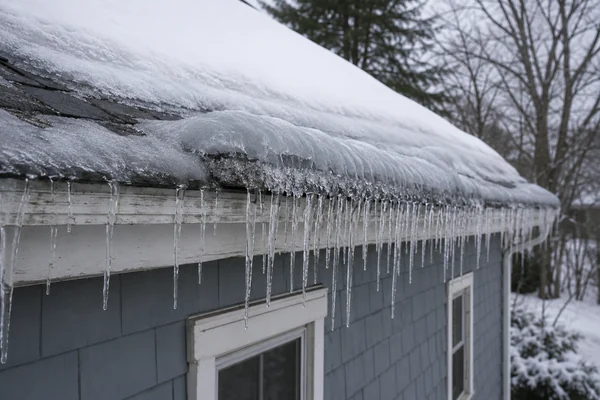
Ice dams and winter roof leaks: the New England problem
Ice dams occur when heat escapes into the attic and warms the upper part of the roof. Snow up there melts, the water runs down to the cold edge over your eaves, and it refreezes into a ridge of ice. That dam traps the next round of meltwater, which has nowhere to go but sideways and up under the shingles, then into the house. According to the U.S. Department of Energy’s Building America Solution Center, this can start with as little as 2 inches of snow on the roof. You don’t need a blizzard. You need a cold snap after a thaw, which is a normal February here.
Two things stop ice-dam leaks. First, a proper leak barrier at the eaves. We install GAF’s WeatherWatch ice and water barrier along the edges, in the valleys, and around penetrations, and it self-seals around the nails so backed-up water can’t sneak through. Many northern building codes now require it at the eaves for exactly this reason. Second, a cold, well-vented attic, so the roof never warms enough to melt the snow in the first place. If your home keeps leaking every winter and only in winter, the shingles probably aren’t the issue. The eave detail and the attic are.
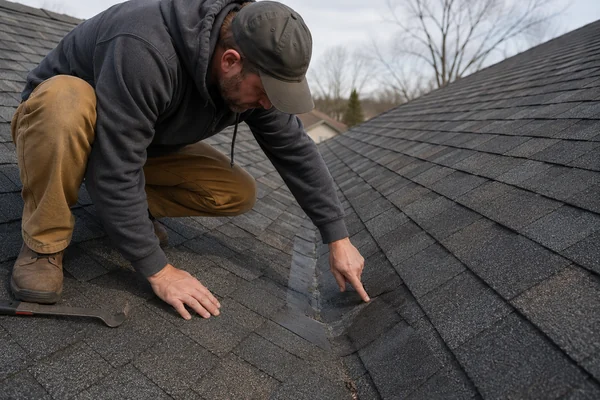
How a roofer finds a leak you can’t
I’ll be straight about what changes when a pro climbs up. From the ground, a roof can look fine. Up close, I’m reading things you’d walk right past: granule loss that ages a shingle early, nails that have backed out, a pipe boot that’s already cracked, flashing that was never sealed right, soft decking that flexes under a boot. A ten-minute roof inspection from someone who does this daily usually beats an afternoon of you guessing from a flashlight and a hunch.
We also look at the whole system, not just the spot that’s wet. A roof is the deck, the underlayment, the flashing, the vents, the drip edge, the pipe boots, and the ridge, and a leak is just the loudest symptom. If you want the plain-English version of how those parts work together, we broke it down in our overview of the full roofing system.
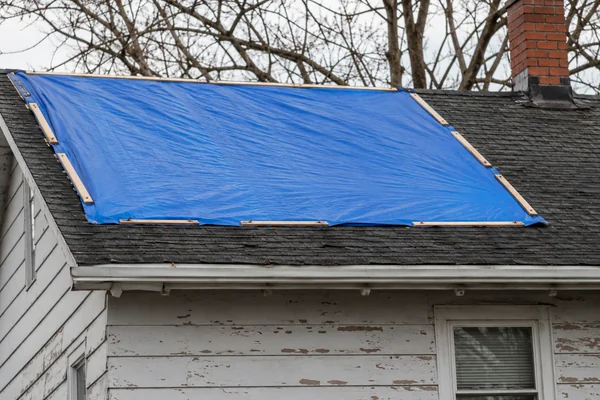
How to stop a roof leak until it’s fixed
Put a bucket under the drip and lay down towels and plastic. If the ceiling is bulging, that’s trapped water, and it’s often safer to poke a small drain hole and catch it than to let a whole section of ceiling come down. Dry everything fast, because mold gets going within a day or two on wet drywall and insulation, as the EPA’s guide on mold and moisture spells out.
If the roof is dry and you can reach it safely, a tarp can buy time. It has to run well past the damaged area and be anchored so wind doesn’t rip it loose. Skip this in ice, snow, or on anything steep. A leak is a bad day; a fall off an icy roof is a much worse one. When it’s active and spreading, that’s what emergency roof repair is for. And a dab of sealant on an obvious cracked boot is fine for now, but don’t confuse it with a repair. The water’s still finding the same path underneath.
Does a leak mean you need a new roof?
Most leaks are a repair. A cracked pipe boot, a length of bad flashing, a few storm-torn shingles, a valley that needs redone. That’s a professional leak repair, not a tear-off. If a roofer looks at one stain and immediately quotes you a whole new roof, get another opinion.
A leak points to replacement when it’s multiple points as opposed to one. When the decking is soft over a wide area, the shingles are near the end of their life and shed granules everywhere, or an aging roof has been leaking in several places over a few winters.
At that point, patching becomes throwing money at a roof that’s already telling you it’s done, and more patchwork stops making sense. We’ll show you photos of what we see and let you make the call, which is the honest way to weigh a repair against a full replacement.
When to call a professional roofer
Reach out to a professional if:
Winter storm damage counts too, and documenting it early matters if you plan to file for storm damage. At that point, more poking around usually makes the mess bigger, not smaller, and a professional roof repair is the cheaper path.
Frequently asked questions
How do I find a roof leak inside my house?
Start in the attic with a flashlight and look at the underside of the roof deck for water stains, mold, damp insulation, or wet wood. Follow the trail uphill, since the entry point is always higher than the drip. Then match that spot to the flashing, vents, or valleys above it.
Where do most roof leaks start?
Almost always at a penetration or a transition, not in the open field of shingles. Flashing around chimneys and walls, cracked pipe boots on plumbing vents, roof valleys, and skylights are the most common starting points. Those details fail years before healthy shingles do.
Why does my roof only leak in the winter?
It’s probably an ice dam, not the shingles. The U.S. Department of Energy notes ice dams can form with as little as 2 inches of snow: heat escaping into the attic melts the snow, and the water refreezes at the cold eaves and backs up under the shingles. An ice and water barrier at the eaves and a well-vented attic are the fixes.
Can I find a roof leak without going into the attic?
On homes with cathedral ceilings, finished attics, or a flat roof, work from the interior stain and the roof surface instead. Find the stain’s spot on the roof, look uphill from it, and watch for standing water on flat sections. It’s harder without attic access, so this is a good time to bring in a pro.
How do I find a roof leak when it’s not raining?
Use a hose. One person watches inside while another soaks the roof in small sections, starting low and moving up, a few minutes per zone. Working slowly is the whole trick, because spraying the entire roof at once only tells you that it leaks, not where.
Is a roof leak always a sign I need a new roof?
Most leaks are a single repair, like a new pipe boot, flashing, or a few shingles. Replacement makes sense when there are multiple leaks, wide areas of soft decking, or a roof already near the end of its life.
When should I call a roofer instead of finding it myself?
Call when the roof is steep or icy, when the leak keeps returning, when water is spreading inside, or when you spot sagging or soft wood. A quick inspection usually finds the source faster and safer than guessing.