
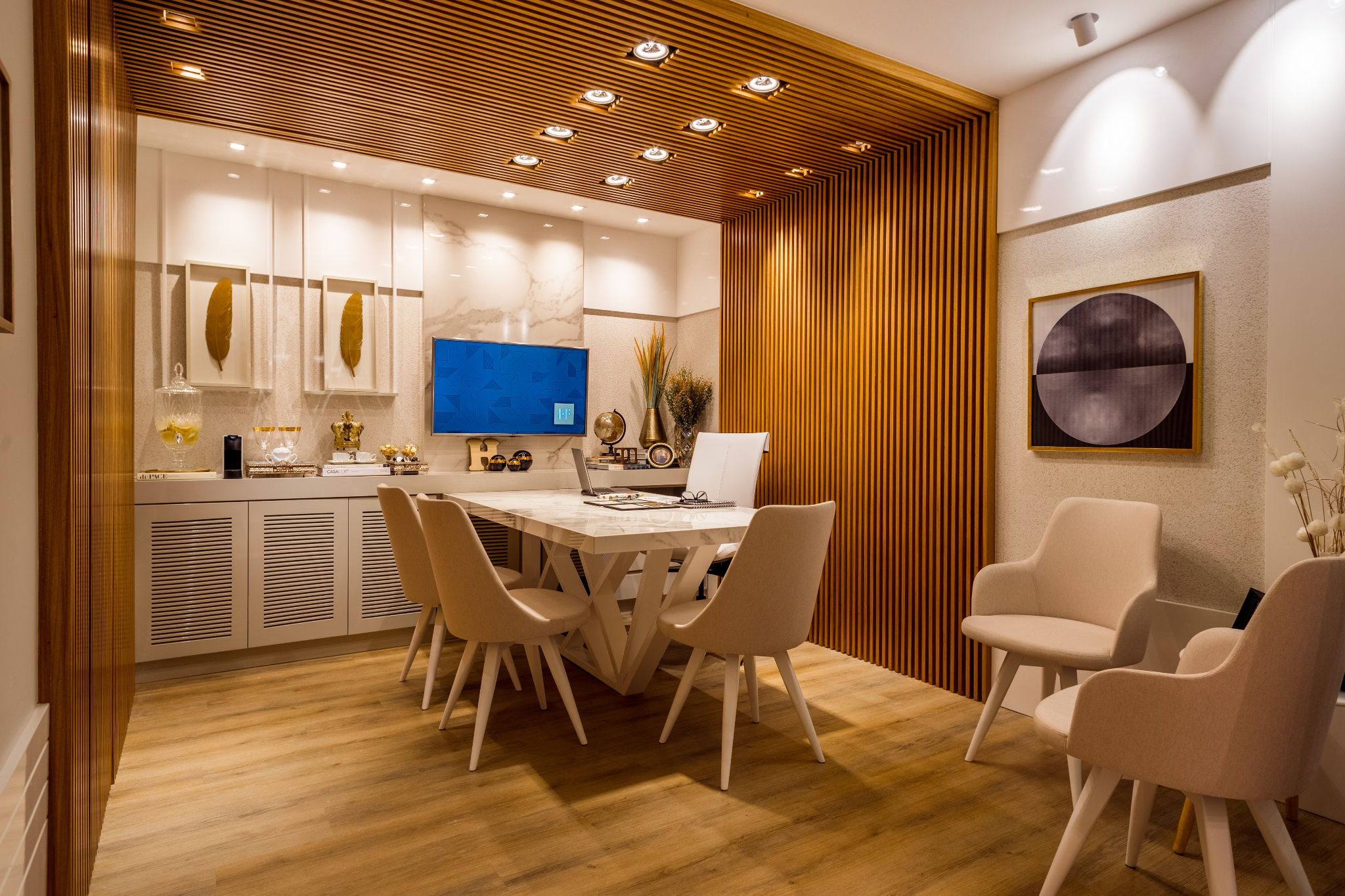
Wood panels have become a popular choice for homeowners looking to add warmth, texture, and structure to their interiors. They work across a wide range of settings, from minimalist apartments and contemporary homes to traditional properties undergoing renovation. Depending on the finish, pattern, and installation method, wood panels can serve as a subtle backdrop or become a defining feature of a room.
Their appeal lies partly in their versatility. Smooth panels suit restrained, modern interiors, while pronounced wood grain adds character to spaces with a more natural feel. Slatted designs introduce rhythm and depth, and larger panels create a cleaner appearance with fewer visible joints. Browse all wood panels to explore finishes, patterns, and styles that suit your interior design needs.
Natural Wood Finishes for a Warm, Timeless Interior
Natural wood finishes remain a reliable option for interiors that need warmth without excessive decoration. Oak, ash, walnut, and other timber varieties each have distinctive grain patterns and colors, allowing homeowners to choose a finish that suits the atmosphere they want to create.
Light oak and ash often complement contemporary and Scandinavian-inspired rooms. Their softer tones work well with white walls, neutral upholstery, and simple furniture. They are also useful in smaller spaces where darker surfaces might make the room feel more enclosed.
Walnut and other deeper brown finishes offer a richer appearance. They suit studies, bedrooms, and living rooms where a more intimate atmosphere is desirable. When paired with pale walls and carefully selected lighting, darker wood can create contrast without dominating the entire interior.
Natural finishes are particularly effective when combined with other materials. Wood panels alongside stone, linen, glass, or metal introduce variety while maintaining a cohesive palette. The aim is to let each material contribute its own texture without allowing competing finishes to distract from the overall design.
Slatted Wood Panels for Contemporary Spaces
Slatted wood panels suit interiors that need texture without relying on elaborate decorative features. Their repeated vertical or horizontal lines create a sense of order, making them a natural fit for contemporary living rooms, bedrooms, and home offices.
Vertical slats draw attention toward the ceiling and work well on walls where a greater sense of height is desirable. Horizontal arrangements create a broader visual emphasis and can suit a long wall or a low media unit.
Slatted panels are frequently used behind televisions, sofas, and beds. They provide a distinct backdrop while helping define a particular part of the room. In open-plan homes, the same treatment can distinguish a seating area from a dining space without introducing a solid partition.
Spacing is an important consideration. Closely arranged slats produce a denser pattern, while wider gaps create a more open appearance. The size of the wall should guide your choice. A heavily detailed pattern might overwhelm a small room, particularly when combined with bold furniture or patterned flooring.
Some slatted products include a backing layer, while others require a separate installation system. If acoustic performance is part of your decision, check the product specifications rather than assuming the decorative panels will significantly reduce noise. The result depends on the complete wall assembly, backing material, and installation method.
Smooth Wood Panels for Minimalist Interiors
Minimalist interiors rely on clean lines, restrained colors, and limited visual clutter. Smooth wood panels support this approach by introducing natural material and warmth without adding an intricate pattern.
Large panels with discreet joints create a continuous appearance. They work well in modern living rooms, bedrooms, and entrance areas where the design benefits from a simple backdrop.
A light timber finish helps maintain a bright appearance, while a darker surface creates stronger contrast against pale furniture or walls. Both options can suit minimalist spaces, provided the overall color palette remains controlled.
Smooth panels also offer flexibility when planning built-in storage. They can be incorporated into cabinet fronts, wardrobe doors, or wall-mounted units to create a consistent finish across different parts of the room. This is particularly useful in compact homes, where storage often occupies a substantial amount of visible wall space.
Installation accuracy is important for this style. Uneven joints, poorly aligned edges, and inconsistent gaps are more noticeable when the surface has little decorative detail to distract from them. Accurate measurements, proper wall preparation, and suitable fixing methods all contribute to a neat result.
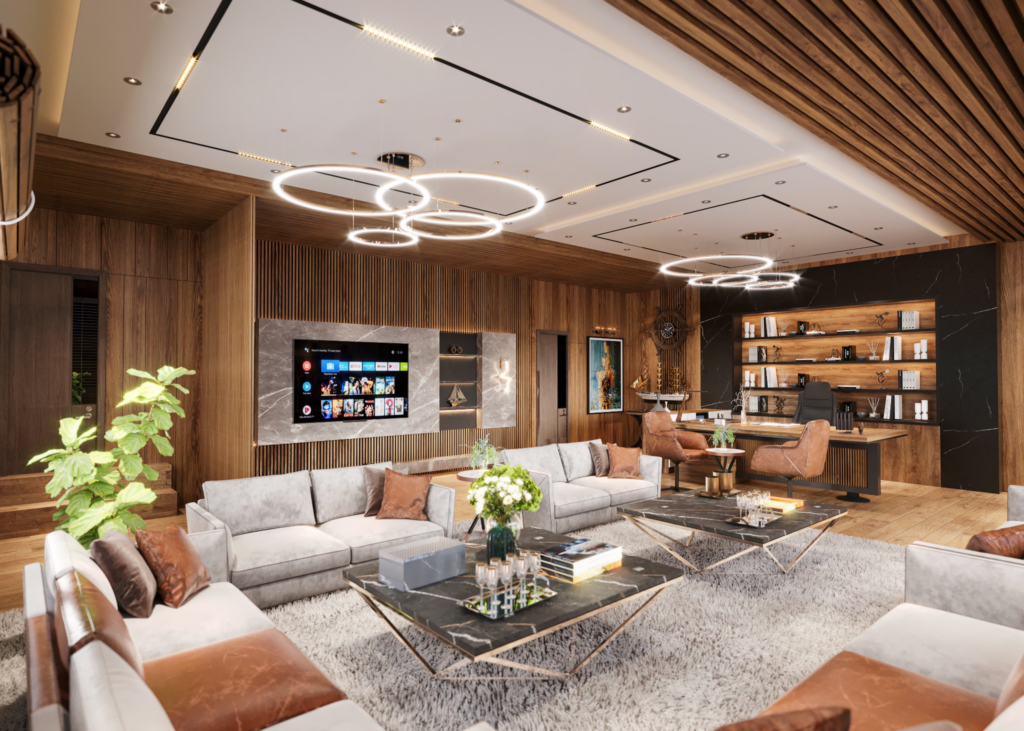
Textured and Decorative Panels for Added Character
Not every modern interior needs a perfectly smooth finish. Textured wood panels introduce depth through visible grain, raised detailing, or carefully arranged surface patterns.
They suit homeowners who want a feature wall with more presence than a plain painted surface. Depending on the design, textured panels work well in dining rooms, entrance areas, and living spaces where the wall is visible from several angles.
The amount of texture should relate to the rest of the room. Pronounced grooves or raised patterns naturally draw attention, so they are often most effective on one carefully selected wall. Covering several surfaces with strong detailing might make the interior feel busy.
Decorative panels also need to work with the lighting. Light falling across a textured surface creates shadows that emphasize its depth. This can be an attractive effect, although strong directional lighting might exaggerate imperfections or make the pattern appear more prominent than expected.
Painted Wood Panels for a Coordinated Color Scheme
Wood panels do not always need to retain a natural timber appearance. Painted finishes provide another way to introduce shape and texture while matching the room’s existing color scheme.
White and soft neutral panels suit bright, understated interiors. Muted green, blue, and earthy shades add character without requiring a strong contrast between the wall and the furniture.
Painted panels are particularly useful when the design includes moldings, rectangular sections, or traditional detailing. Using a consistent color across the wall can make these elements feel more integrated, while contrasting trim creates a more pronounced decorative effect.
The type of paint and the preparation process influence the final finish. Surfaces need to be suitable for the selected coating, and some products require priming or specialist treatment before painting. Follow the manufacturer’s instructions to avoid problems with adhesion, uneven coverage, or premature wear.
Final Thoughts
Wood panels offer plenty of scope for creating a modern interior, whether you prefer the simplicity of smooth surfaces, the rhythm of slatted designs, or the warmth of natural timber. The right finish should complement the room rather than compete with its furniture, lighting, and other materials.
Start by considering the purpose of the wall, the amount of natural light available, and the level of detail already present in the space. Then compare suitable materials, installation requirements, and maintenance needs before committing to a design.