
In my experience, a kitchen can look spotless while still hiding grease, crumbs, food residue, and moisture in overlooked areas. Regular wiping and sweeping handle the obvious mess, but deep cleaning requires a different approach.
I especially recommend a consistent routine for home cooks and caterers. Higher cooking volumes create more grease, spills, and food debris.
Atlanta’s humidity adds another challenge. I have found that damp towels, sponges, and cutting boards can stay wet longer, so proper ventilation and drying deserve extra attention.
Key Takeaways
- I use daily cleaning for food-contact and high-touch surfaces.
- I handle appliances, floors, cabinets, and backsplashes during weekly cleaning.
- I reserve monthly cleaning for hidden grease, cabinet tops, appliance gaps, and refrigerator gaskets.
- I pay extra attention to drying because Atlanta’s humidity can keep kitchen items damp.
- I increase cleaning frequency when cooking volume increases.
- I use deep-cleaning sessions to spot appliance problems before they become bigger issues.
Why a Standard Kitchen Cleaning Isn’t Enough
Daily cleaning keeps the kitchen manageable, but it does not reach every problem area.
In my experience, cooking residue can travel beyond the stovetop and settle on cabinet tops, range hood components, walls, and appliances. Crumbs and dust also collect underneath and behind equipment.
That is why I divide my cleaning routine into daily, weekly, and monthly tasks. This keeps buildup under control without turning cleaning into an all-day project.
Refrigeration equipment deserves particular attention in a busy kitchen, and businesses that need professional walk-in cooler repair in Atlanta can benefit from having cooling problems addressed before they disrupt food preparation or storage.
Atlanta Kitchen Deep-Clean Checklist
Breaking the work into daily, weekly, and monthly tasks can make a deep-cleaning routine easier to maintain. Kitchens used for frequent cooking or catering may require some tasks more often.
Daily Cleaning
After cooking, I focus first on areas that contact food or hands:
- Counters and food-preparation surfaces
- Stovetop and surrounding areas
- Sink and faucet
- Cutting boards
- Handles, knobs, and controls
- Spills, crumbs, and visible debris
- Damp towels, sponges, and cleaning cloths
I also make sure reusable cleaning tools dry completely. For home catering, I clean food-contact and high-touch surfaces more often when preparing multiple dishes.
Weekly Cleaning
Once a week, I move beyond the surfaces I clean every day:
- Microwave interior and exterior
- Cabinet doors and handles
- Refrigerator shelves and drawers as needed
- Baseboards
- Floors
- Backsplash
- Major appliance exteriors
- Frequently used storage areas
If I notice heavy grease, spills, or increased foot traffic, I clean these areas sooner.
Monthly Deep Cleaning
Monthly cleaning is where I tackle the places that are easy to forget:
- Range hood filters
- Behind and underneath movable appliances
- Tops of upper cabinets
- Cabinet and drawer interiors
- Refrigerator door gaskets
- Refrigerator and freezer coils, following manufacturer instructions
- Faucet aerators and mineral buildup
- Gaps between counters and backsplashes
- Light fixtures
- Storage areas and expired food
- Reusable cleaning tools
I do not try to finish every monthly task at once. Breaking the work into smaller sections makes the routine much easier to maintain.
Kitchen Areas I Commonly See People Miss
Range Hood Filters
Range hood filters collect grease over time. I clean them according to the manufacturer’s instructions and check them more often in kitchens where frying is common.
Cabinet Tops
Cabinet tops are easy to overlook because they are outside normal eye level. Oil residue can attract dust and create stubborn buildup.
Behind and Under Appliances
I regularly find crumbs, grease, and dust in these spaces. If an appliance can be moved safely, I clean behind it. I never move heavy equipment when doing so could cause injury or damage.
Cabinet and Drawer Interiors
Even clean-looking cabinets can contain crumbs and spills. I clean them in sections, wipe the shelves and corners, let them dry, and then replace the contents.
This is also a good time to remove expired food and reduce conditions that can attract pests.
Keeping cabinets, drawers, and surrounding areas free of crumbs and food residue is also an important part of kitchen pest prevention. Regular deep cleaning can help eliminate some of the conditions that make a kitchen attractive to pests. For additional prevention strategies, see Kitchen Pest Control: What Every Home Cook Should Know.
Refrigerator Door Gaskets
I check refrigerator seals for food residue, grime, cracks, or loose sections. A damaged gasket can affect how effectively the refrigerator maintains temperature.
How Atlanta’s Climate Affects Kitchen Cleaning
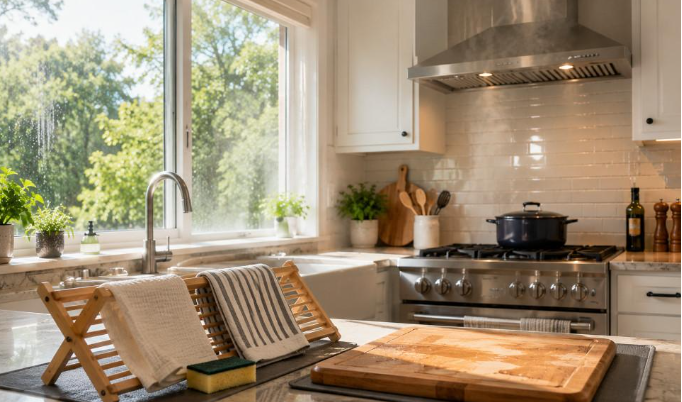
Atlanta’s humidity can slow the drying of towels, sponges, cutting boards, and other damp items.
In my experience, good airflow makes a noticeable difference. I use ventilation when cooking and make sure damp cleaning tools are fully dry before storing them.
Older kitchens or kitchens with limited exhaust may need extra attention around moisture-prone areas, faucets, and other fixtures. White or chalky buildup can indicate that descaling is needed.
Cleaning and Appliance Maintenance Should Go Together
I also use deep-cleaning sessions as quick equipment checks.
While cleaning refrigerators, freezers, ovens, and other appliances, I look for obvious warning signs such as:
- Damaged door gaskets
- Leaks
- Unusual noises
- Poor cooling
- Heavy or unusual buildup
- Inconsistent performance
Cleaning will not repair a malfunctioning appliance. However, spotting a problem early can help prevent a small issue from disrupting food preparation or storage.
For Atlanta homeowners who need help with an appliance that is not working properly, Appliance EMT can be a resource for professional appliance repair. This can be particularly useful for home caterers who rely heavily on refrigerators, freezers, ovens, and other kitchen equipment.
How Often Should a Home Catering Kitchen Be Deep-Cleaned?
There is no single schedule that works for every kitchen. I adjust cleaning frequency based on cooking volume and how quickly grease, food residue, and moisture build up.
A practical starting point is:
Daily: Food-contact surfaces, cooking areas, spills, sinks, handles, and visible debris.
Weekly: Appliances, cabinet fronts, floors, backsplashes, and refrigerator surfaces.
Monthly: Range hood filters, cabinet tops, appliance gaps, refrigerator gaskets, storage areas, and other hidden buildup.
If I am dealing with a high-volume catering kitchen, I increase the frequency rather than waiting for the next scheduled deep clean.
Frequently Asked Questions
How often should a home caterer deep-clean a kitchen?
Daily cleaning should cover food-contact and high-touch areas. Weekly cleaning can address frequently used appliances and surfaces, while a more thorough deep clean can target hidden buildup at least once a month.
If cooking volume increases, cleaning frequency should increase as well.
Does Atlanta’s climate affect kitchen cleaning routines?
Yes. Atlanta’s humidity can slow the drying of damp kitchen materials. Pay particular attention to dish towels, sponges, cutting boards, and other items that remain wet.
Good ventilation and complete drying can help prevent prolonged moisture from becoming a recurring cleaning issue.
What is the most overlooked spot during a kitchen deep clean?
Range hood filters and cabinet tops are commonly overlooked because they are not part of most everyday cleaning routines.
Behind and underneath appliances are also easy to miss and can collect grease, crumbs, dust, and other debris.
How should I clean a kitchen used for home catering?
Start with the same basic routine used in a household kitchen, but increase cleaning frequency as cooking volume increases.
Pay particular attention to food-contact surfaces, refrigeration, storage areas, cooking equipment, and locations where grease or food residue can accumulate.
If food is being prepared for sale, follow applicable food-safety requirements in addition to a household cleaning schedule.
Do I need commercial-grade cleaning products?
Usually not for routine household kitchen cleaning. An appropriate cleaner or degreaser, suitable cleaning tools, and a food-safe sanitizer where appropriate may be sufficient.
The right product depends on the surface and the type of residue. Always follow the product label and the manufacturer’s instructions for appliances, countertops, cabinets, and other materials.
A Kitchen Cleaning Routine That Works
A clean kitchen is easier to maintain when deep cleaning becomes part of a regular routine instead of an occasional marathon.
Start with daily food-contact and high-touch areas, add weekly appliance and surface cleaning, and use a monthly schedule for hidden grease, storage areas, appliance gaps, cabinet tops, and other commonly missed spots.
For Atlanta kitchens, proper drying and ventilation deserve extra attention because humid conditions can keep materials damp longer.
Home cooks and caterers do not need to clean everything every day. A consistent schedule that matches the kitchen’s cooking volume can keep buildup under control while making appliance and equipment problems easier to spot.