Table of Contents
ToggleWelding has changed dramatically over the past century. What was once primarily a manual craft has become a highly controlled industrial process supported by automation, advanced materials, digital monitoring, and increasingly precise process parameters. Yet one fundamental element remains essential across many welding applications: the controlled use of gases.
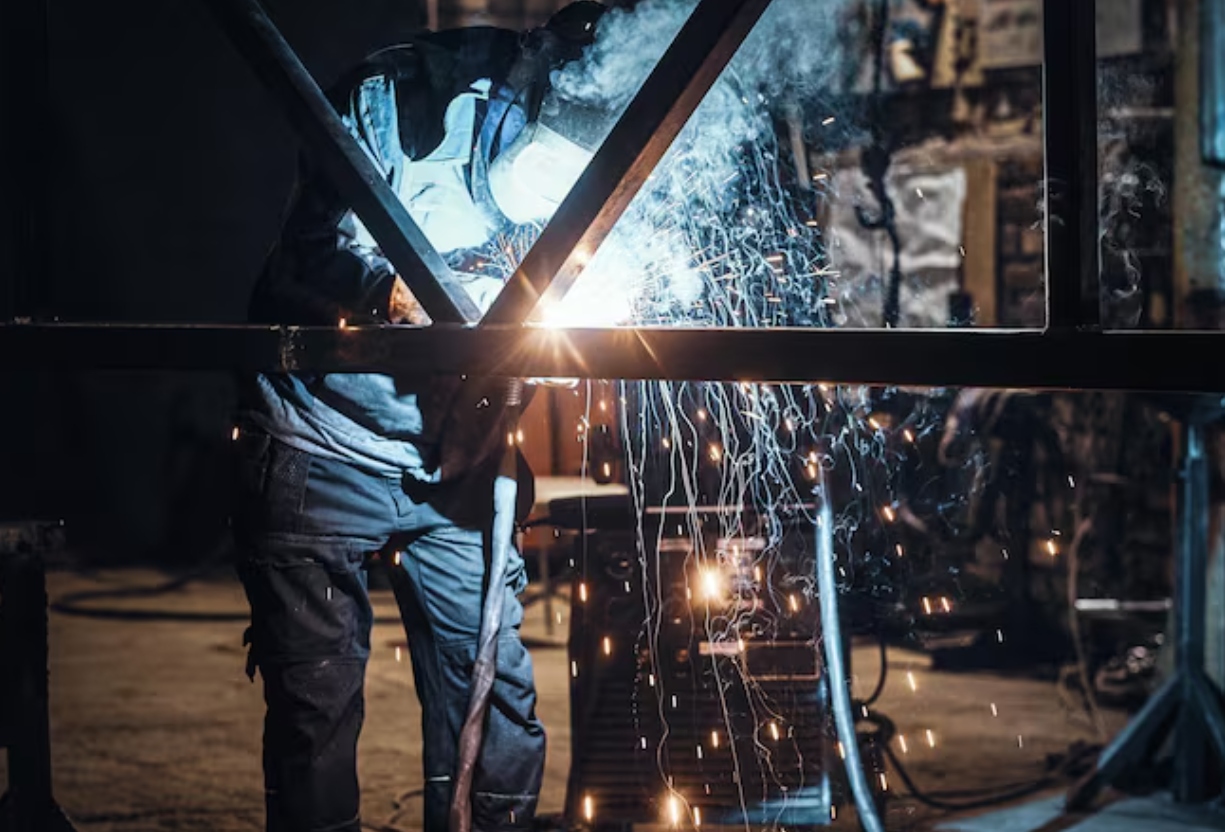
Modern manufacturing depends on welds that are strong, repeatable, and suitable for demanding operating conditions. Shielding gases help protect the molten weld pool from atmospheric contamination while influencing arc behavior, penetration, heat transfer, and the appearance of the finished joint. The relationship between welding technology and gases has therefore evolved together, becoming increasingly sophisticated as industrial requirements have grown.
International standards reflect this development. ISO 14175 establishes classifications for gases and gas mixtures used in fusion welding and related processes, including gas-shielded arc welding, plasma welding, laser welding, and cutting.
Contents
From Manual Welding to Industrial Production
Early industrial welding relied heavily on the skill and experience of individual operators. Processes such as shielded metal arc welding provided manufacturers with practical ways to join steel components, but results could vary according to operator technique, material condition, and environmental factors.
The introduction and expansion of gas-shielded welding represented an important step forward. Instead of relying entirely on flux to protect the weld area, processes such as gas metal arc welding and gas tungsten arc welding use an external gas or gas mixture to shield the arc and molten metal.
This created greater opportunities for process control. Operators could adjust electrical parameters while selecting shielding gases appropriate for particular materials and welding conditions.
Today, welding is no longer viewed simply as a method of joining two pieces of metal. It is an engineered manufacturing operation in which numerous variables must work together.
The Growing Importance of Process Control
Modern industrial production demands consistency. A weld that looks acceptable visually may still contain defects that compromise its mechanical performance. Porosity, cracking, excessive spatter, inadequate penetration, and other imperfections can increase costs through inspection, repair, and production delays.
Shielding gas plays an important role in preventing some of these problems. The American Welding Society notes that atmospheric contaminants such as oxygen, nitrogen, and hydrogen can destabilize the arc and contribute to defects including porosity and cracking.
This explains why the evolution of welding has also been an evolution in gas selection, delivery, measurement, and control.
How Welding Gases Influence Modern Welding
A shielding gas is not simply an invisible barrier around the weld. Its chemical and physical properties can affect the behavior of the entire welding process.
Argon, carbon dioxide, oxygen-containing mixtures, helium, and other gases can be used in different combinations depending on the process and material. The appropriate selection depends on factors such as the base metal, transfer mode, desired penetration, arc stability, productivity requirements, and applicable welding procedure.
For example, argon-rich mixtures are commonly used in gas metal arc welding, while carbon dioxide can provide characteristics associated with greater penetration and heat transfer. Small quantities of oxygen can also influence arc stability and wetting in selected applications.
The precise composition matters. AWS welding procedure specifications demonstrate that specific gas mixtures can be incorporated into qualified procedures for carbon steel applications.
In this context, svetsgas may appear as the gas selection that is part of the engineering of the welding process.
The Expansion of Gas-Shielded Welding
Gas metal arc welding became particularly important because it combined productivity with the possibility of continuous wire feeding. This made it suitable for many industrial environments where manufacturers needed to produce large numbers of consistent welds.
Gas tungsten arc welding offered a different advantage. Its precise arc and controllability made it useful where weld quality and control were particularly important.
As these processes matured, manufacturers gained a broader range of options for different materials and applications. Stainless steels, aluminum alloys, carbon steels, and other metals can require different approaches to shielding and process control.
This growing specialization has also increased the importance of understanding industrigaser, or industrial gases, as part of a broader manufacturing system rather than treating gases as secondary consumables.
Automation Changes the Role of Welding
One of the biggest changes in industrial welding has been automation.
Robotic welding systems can perform repetitive movements with a high degree of consistency. Automated equipment can control torch movement, travel speed, wire feed, current, voltage, and other variables according to programmed parameters.
However, automation does not eliminate the importance of shielding gas. In fact, it can make gas control even more significant.
A robot can repeat the same movement thousands of times, but poor shielding conditions can still produce inconsistent results. Gas flow, nozzle condition, leaks, drafts, and incorrect mixture selection can affect the welding environment.
This means modern welding cells increasingly depend on coordinated control of mechanical, electrical, and gas-related parameters.
Gas Delivery Becomes Part of Quality Management
Industrial facilities must consider how gas reaches the welding operation. Cylinders, distribution systems, regulators, hoses, flow controls, and connections all contribute to reliable delivery.
Insufficient or unstable shielding can expose the weld pool to atmospheric gases. Excessive flow can also create turbulence and potentially draw surrounding air into the shielding zone.
The objective is therefore not simply to use “more gas.” It is to establish an appropriate and controlled shielding environment for the particular welding procedure.
AWS guidance emphasizes that insufficient shielding can contribute to welding defects, while equipment components such as diffusers help distribute shielding gas around the nozzle.
Digital Manufacturing and Welding
The latest stage of welding development involves digitalization.
Modern production environments can collect information about welding parameters and use it to identify deviations from established procedures. Monitoring can help manufacturers investigate defects, improve repeatability, and maintain documentation for quality assurance.
This is particularly relevant in industries where welded components must meet demanding specifications. When production becomes more data-driven, welding parameters can be treated as measurable process variables rather than relying solely on visual inspection or operator experience.
Gas usage can also become part of this approach. Monitoring consumption and flow can help identify unusual patterns that may indicate leaks, equipment problems, or process changes.
The evolution is therefore moving from simple mechanization toward increasingly integrated production systems.
Advanced Materials Require Greater Precision
Industrial materials have also evolved. Modern manufacturers work with high-strength steels, corrosion-resistant alloys, aluminum, titanium, and other specialized materials.
These materials can have different thermal and metallurgical characteristics. Welding procedures must account for these differences.
Shielding gases are particularly important because atmospheric exposure during welding can affect the molten material and the resulting weld properties. Gas selection must therefore be compatible with the material and process rather than being treated as a universal choice.
International standardization helps create a common technical framework. ISO 14175 classifies shielding, backing, process, and assist gases according to chemical properties and metallurgical behavior.
This classification supports more consistent communication between engineers, welding professionals, and manufacturers.
Efficiency and Sustainability in Modern Welding
Industrial welding is also becoming increasingly focused on efficiency.
Manufacturers want to reduce scrap, minimize rework, improve productivity, and use materials and energy more effectively. Every defective weld can require additional labor, inspection, energy, and material.
Gas management contributes to this equation. An appropriately selected gas mixture and properly controlled flow can support stable welding and reduce avoidable defects.
Efficiency does not mean reducing gas use indiscriminately. Instead, it means understanding the process well enough to deliver the required shielding conditions without unnecessary consumption.
This approach fits within a broader industrial movement toward resource optimization and more measurable manufacturing processes.
Safety Remains a Fundamental Requirement
Technological development does not remove the need for basic gas safety.
Industrial gases must be handled according to appropriate safety procedures. Cylinders and gas systems require suitable storage, transportation, connections, and inspection practices. Welding areas must also have adequate ventilation and controls appropriate to the hazards present.
The risks vary depending on the gases and welding processes involved. Consequently, workers need training that covers both welding operations and the specific characteristics of the gases being used.
Safety should be considered alongside productivity and quality rather than treated as a separate concern.
The Future of Welding
The future of industrial welding will likely combine automation, advanced sensing, artificial intelligence, improved materials, and increasingly precise process control.
Robotic systems can already repeat complex welding paths. Digital technologies can monitor production variables. Advanced equipment can respond to changes in operating conditions. Meanwhile, engineers continue developing new approaches for joining materials that were difficult to weld using older technologies.
Gas technology will remain part of this evolution.
As welding becomes more precise, shielding requirements can become more carefully defined. Gas mixtures may be selected according to increasingly specific metallurgical and production objectives. Monitoring systems may also provide better information about gas flow and process stability.
The central principle, however, will remain familiar: protecting and controlling the welding environment is essential to producing reliable joints.
Welding as an Integrated Industrial Process
The evolution of welding demonstrates how manufacturing technologies rarely advance in isolation. Improvements in power sources, automation, materials, digital controls, and gas technology have reinforced one another.
Modern welding is consequently much more than an operator striking an arc. It is a carefully engineered process in which material properties, electrical parameters, mechanical movement, environmental conditions, and shielding gases interact.
Reliable welding gases support arc stability and protection of the molten weld pool. Proper gas selection supports the requirements of specific materials and processes. Consistent delivery helps maintain repeatable production.
As industrial manufacturing becomes more automated and data-driven, these fundamentals will become even more important. The future of welding will not simply depend on faster machines. It will depend on better control of every variable that influences the final joint.
From traditional manual fabrication to digitally monitored robotic production, welding has continually adapted to industrial demands. Its next evolution will likely be defined by greater precision, stronger process integration, and smarter resource management, with gases continuing to play a quiet but essential role at the heart of the operation.