Table of Contents
ToggleBudget vs. Premium Products is a practical question every shopper faces when a purchase matters beyond its sticker price. This guide helps readers pick the smarter option by focusing on use intensity, failure impact, and the true cost over time. It opens with clear rules of thumb, then walks through performance, durability, and a simple framework that turns vague hesitation into a repeatable decision. The tone is direct and evidence-minded so people can act with confidence, avoid buyer’s remorse, and stretch both time and money further.
Contents
Key Takeaways
- The primary factor in deciding between budget vs premium products is evaluating use intensity, failure cost, and durability gap to minimize total cost of ownership.
- Higher upfront prices for premium products often translate to longer-lasting performance and lower costs over time despite a bigger initial investment.
- Assessing real-world performance and practical features ensures your choice fits your specific needs and avoids paying for unused extras.
- Measuring total cost of ownership, including maintenance, energy, and resale value, reveals the true value beyond sticker price.
- Using a simple decision framework helps shoppers make confident, repeatable choices that balance short-term savings with long-term satisfaction.
- Smart shoppers quantify usage hours, failure impact, and product lifespan to select options that optimize both money and daily convenience.
Why The Budget Vs Premium Choice Matters For Smart Shoppers
Fact: The money saved upfront can be erased by higher running costs, replacements, or poor performance. Many shoppers think the cheapest model means the best deal, but price alone rarely predicts long-term value.
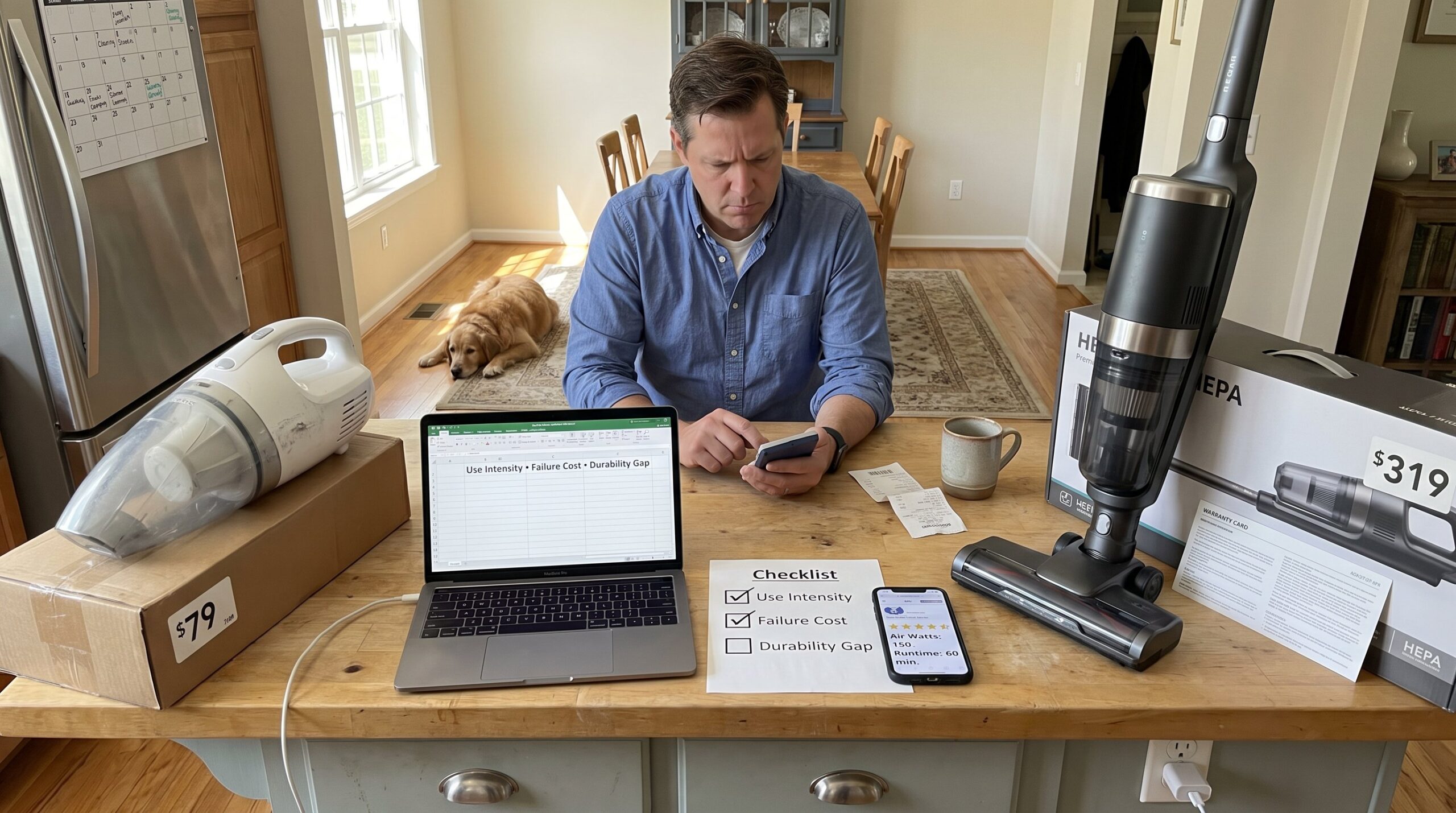
A concrete example helps. A $80 cordless vacuum may clog and lose suction in 9 months: a $320 model with a better motor and filter may still work reliably after four years. If the cheaper unit requires three replacements in that span, the buyer paid more and spent extra time troubleshooting, time that could be valued at real dollars. Around 47% of consumers report considering resale or longevity before buying, which shows this calculation matters to nearly half of shoppers.
Beyond money, failure cost can be nonfinancial. A poorly performing air purifier affects sleep and health. An unreliable washing machine leads to soaked laundry and a ruined weekend. Those outcomes justify paying more in many cases. This section frames the core trade-off: short-term savings vs long-term total cost of ownership and daily satisfaction.
Key Factors To Evaluate Before You Buy
Fact: Four factors reliably predict whether a premium model will be worth it: frequency of use, impact of failure, measurable durability, and support terms. Shoppers who rate these factors quantitatively make better choices.
Start by making simple metrics. For frequency of use, list daily/weekly/monthly. For impact of failure, assign low/medium/high based on safety or disruption. For durability, look for measured lifespans (hours, cycles, years) or return data. Finally, warranty length, availability of parts, and service centers indicate how supported the product will be.
Those who want a repeatable process can use the LivingPristine method described in the site’s buying guide. Reviewing a short primer like the buying guides overview helps shoppers convert vague doubts into a checklist. For reading specs, consult a quick reference such as the page on reading specifications to translate manufacturer numbers into real-world expectations.
Performance, Features, And Fit For Purpose
Answer: Choose the model whose real-world performance matches how it will be used.
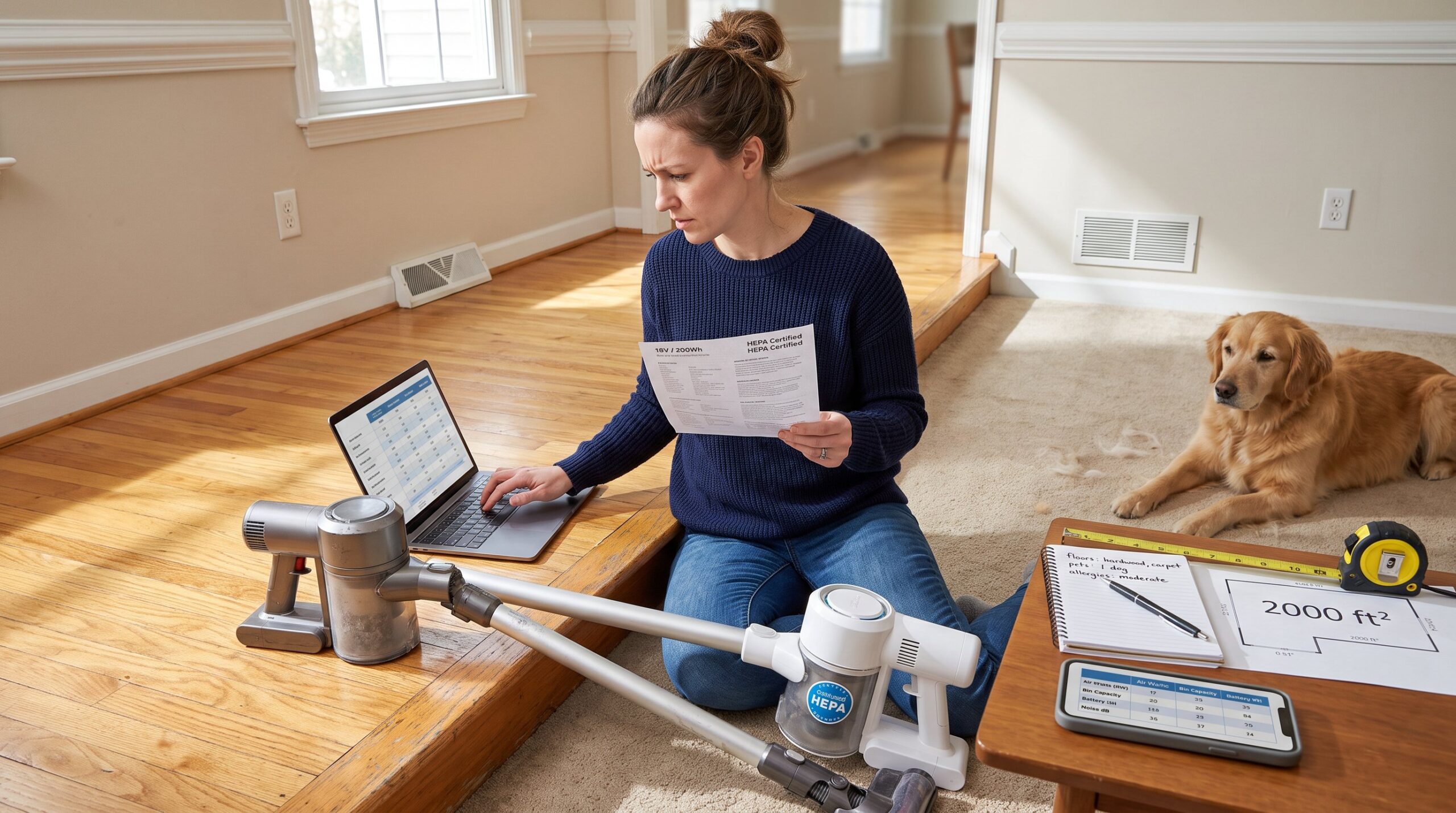
Performance differences are often measurable. For example, vacuums list suction (air watts) and run time: a premium model might list 220 air watts and 60 minutes, while a budget unit lists 120 air watts and 25 minutes. If a household cleans daily and has pets, the higher-spec unit saves time: it vacuums rooms in fewer passes and needs filter changes less often. That can translate to half the cleaning time across a month.
Features matter only if used. Extra brush heads, app controls, or quiet modes add cost but little value when they sit unused. A practical test is a two-week trial: if a feature isn’t used twice in that window, its long-term value is low.
Shoppers should also compare manufacturer measurements to independent tests. Trusted review hubs often state how a product performs under realistic loads. When brand reputation matters, for instance, when buying large appliances, an external roundup like the 2026 appliance brand guide can verify which manufacturers consistently deliver higher performance and durability.
Durability, Total Cost Of Ownership, And Resale Value
Insight: Higher upfront price often buys years of trouble-free use, which lowers the total cost of ownership (TCO).
Measure TCO with simple math: add purchase price, expected maintenance, and energy or consumable costs over a realistic lifespan, then divide by years of use or by expected uses. A premium blender that costs $400 with a 10-year life and $20 annual parts cost has a per-year cost of $42. A $100 blender that lasts two years and needs $15 parts per year costs about $58 per year. The cheaper unit looks cheaper at purchase but costs more over time.
Resale value changes the equation further. Premium brands often retain 40–60% of their value after several years, while budget models may have negligible resale worth. For shoppers who upgrade frequently or treat gadgets as semi-liquid assets, that retained value offsets part of the premium.
A practical warning: category churn matters. Electronics and small kitchen gadgets evolve rapidly: a premium phone bought today may be obsolete in three years. In contrast, heavy tools, large appliances, or professional vacuums often see the greatest TCO advantage from premium choices.
A Simple Decision Framework: When To Choose Budget Vs Premium
Rule: Use three quick checks, Use Intensity, Failure Cost, and Durability Gap.
-
Use Intensity: If an item is used daily or handles core tasks (cleaning, cooking, commuting), favor premium. For occasional tools, guest bedroom linens, single-use gadgets, budget usually suffices.
-
Failure Cost: If a failure costs time, money, or safety (e.g., a broken fridge, a failed power tool on a job), premium is justified. If failure merely means inconvenience, budget is reasonable.
-
Durability Gap: Compare expected lifespans. If the premium model lasts at least twice as long or has serviceable parts, the higher price often pays back.
Apply the framework to an example: choosing a vacuum for a two-pet household. Use intensity is high (daily), failure cost is medium-high (dirt and allergens), and the durability gap between models is large. The framework indicates premium. For a seldom-used holiday projector, use intensity is low and failure cost is low, budget wins.
For shoppers who want a guided process, the site’s core primer on how to compare products integrates these checks into a short worksheet and is a natural next step to apply this framework to specific categories.
Conclusion
Takeaway: Smart shoppers weigh use, failure impact, TCO, and resale value rather than focus on the lowest sticker price. A simple three-check framework turns indecision into a clear choice. When in doubt, quantify: estimate hours of use, likely repair cost, and expected lifespan, then pick the option that minimizes total cost and maximizes daily satisfaction.