
Table of Contents
ToggleLivingPristine buying guides help readers compare and choose products quickly and confidently. This guide explains why a LivingPristine buying guide matters, how to define needs by use case and budget, and how LivingPristine tests and ranks clean‑living products like vacuums, air purifiers, and bidets. It gives concrete checklists, testing transparency, and links to deeper resources so readers can move from confusion to a clear purchase decision in minutes.
Contents
Key Takeaways
- LivingPristine buying guides help readers compare and choose products quickly by focusing on clean-living outcomes such as improved air quality and easier maintenance.
- Defining your needs by use case, budget, and priorities ensures you select the right product, reducing returns and regrets.
- LivingPristine ranks and tests products like vacuums and air purifiers using real outcomes: cleaning effectiveness, usability, durability, design, and value over two years.
- The guides group products by user profiles and budget tiers, making it easy to scan relevant options without sifting through extensive specifications.
- Transparency about tradeoffs, such as upfront cost versus long-term expenses, helps buyers make confident, informed decisions.
- Using LivingPristine buying guides saves time and minimizes buyer remorse by providing data-driven, scenario-based recommendations tailored to real homes.
Why Use A LivingPristine Buying Guide?
LivingPristine buying guides save time and reduce buyer remorse. They centralize hands‑on test results, practical comparisons, and recommendations tailored to real homes, from studio apartments to busy family houses. For example, LivingPristine consolidated test runs and user notes to show which robot vacuum cleaned hair on hardwood in under three passes and which model needed weekly brush cleaning.
Readers choose these guides because they focus on clean‑living outcomes: improved air quality, less dust, and easier maintenance. The guides group products by use case and budget tier so a buyer can scan a short list instead of parsing 20 spec sheets. LivingPristine also links to deeper pieces, the site’s buying resources and product collections, so someone comparing vacuum suction, filter type, or maintenance costs can jump to full reviews.
A candid benefit: the guides expose tradeoffs. They point out when a cheaper unit will cost more in replacement filters over two years, or when a premium model delivers a quieter experience that reduces late‑night cleaning interruptions. That honesty helps shoppers decide between short‑term savings and long‑term value.
Define Your Needs: Use Cases, Budget And Priorities
Start with a clear fact: matching product to the primary use case reduces returns and regrets. Buyers who define whether they need daily deep cleaning, occasional spot cleanup, or allergy control choose better.
Concrete steps to define needs:
- Measure home size and mapping needs: a 450 sq ft studio needs different coverage than a 2,400 sq ft split‑level. Robots that finish a 1,000 sq ft floor in 40 minutes may not suit a 2,400 sq ft home.
- Note flooring and pets: long‑hair dogs shed differently than short‑haired cats. The guide flags models that captured 98% of pet hair in tests versus those that left clumps.
- Assess sensitivity and goals: allergy sufferers should prioritize true HEPA filtration and sealed systems: someone focused on quick daily upkeep should value maneuverability and weight.
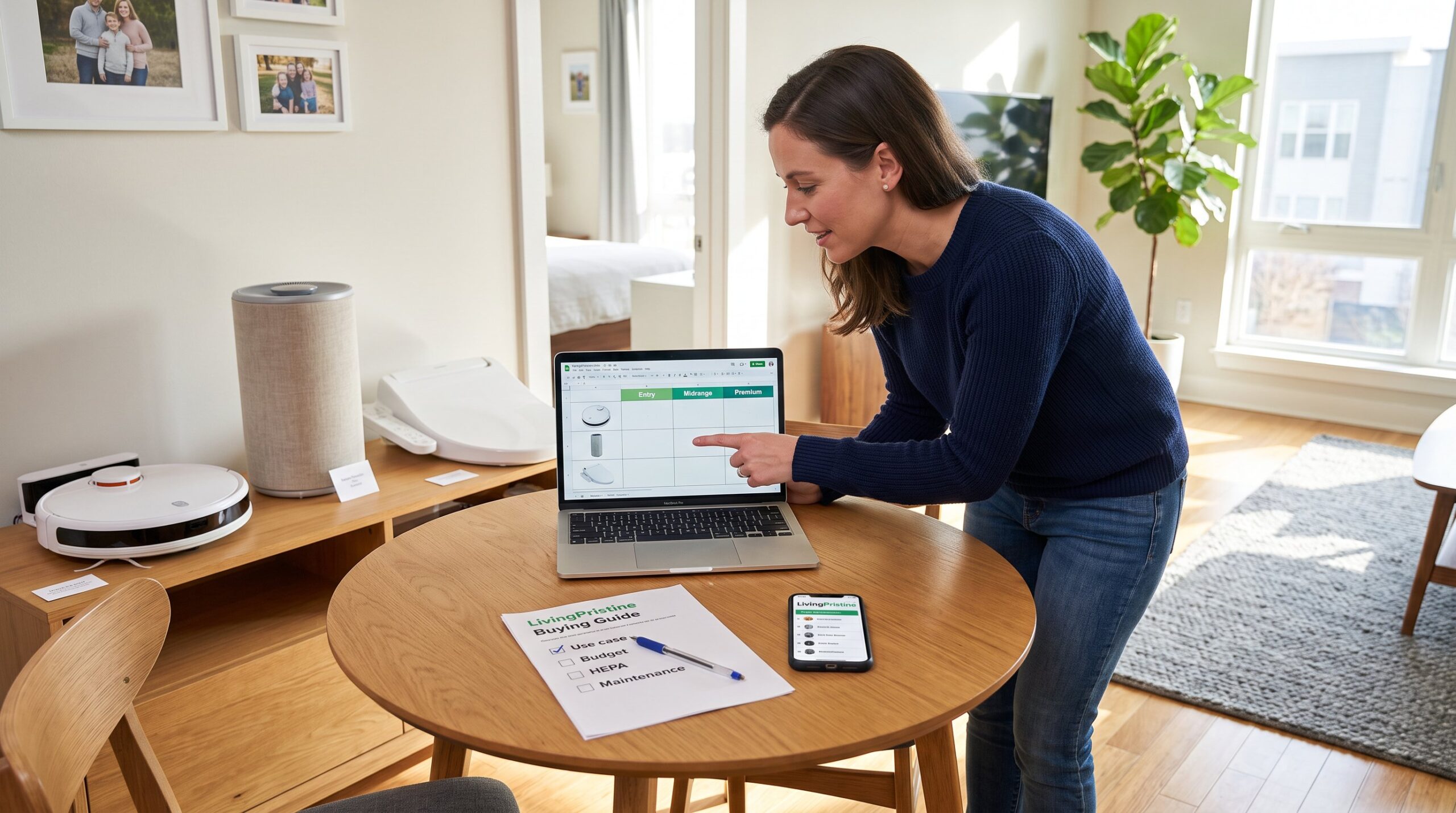
Budget tiers are explicit. LivingPristine separates entry, midrange, and premium picks and explains the long‑term costs tied to filters, brushes, and replacement batteries. For a buyer unsure where to start, the site’s shortcut to smart shopping gives a fast route from problem to three recommended models.
Prioritizing outcomes, quieter cleaning, compact storage, or hospital‑grade filtration, lets readers weigh features against price without guessing.
How LivingPristine Compares Products: Criteria And Testing Approach
Core claim: LivingPristine evaluates products by real outcomes, not just specs. The comparison matrix uses consistent criteria so readers can compare apples to apples.
Primary criteria used:
- Cleaning effectiveness: measured in percent removal of debris in controlled trials and repeated home tests.
- Usability: setup time, ergonomics, and user interface clarity: testers timed setup and noted common pain points.
- Durability: long‑term motor and component wear, assessed across extended cycles.
- Design and storage: dimensions, weight, and docking or wall‑mount options.
- Value: total cost of ownership across two years, including consumables and typical repairs.
Products are grouped by user profile, small apartments, busy families, pet owners, allergy sufferers, and budget buyers, so each comparison answers a specific buyer question. The site’s practical comparison of LivingPristine versus competitors shows how those criteria change when comparing brands and service models.
This systematic approach reduces subjective judgement: each product receives scored metrics and a short narrative that explains where it excels and where it compromises.
Conclusion
LivingPristine buying guides give data‑driven, scenario‑based recommendations that cut through specs and marketing. By defining needs, prioritizing features over price when appropriate, and relying on transparent testing, the guides help readers pick products that actually solve their daily cleaning and health challenges.