
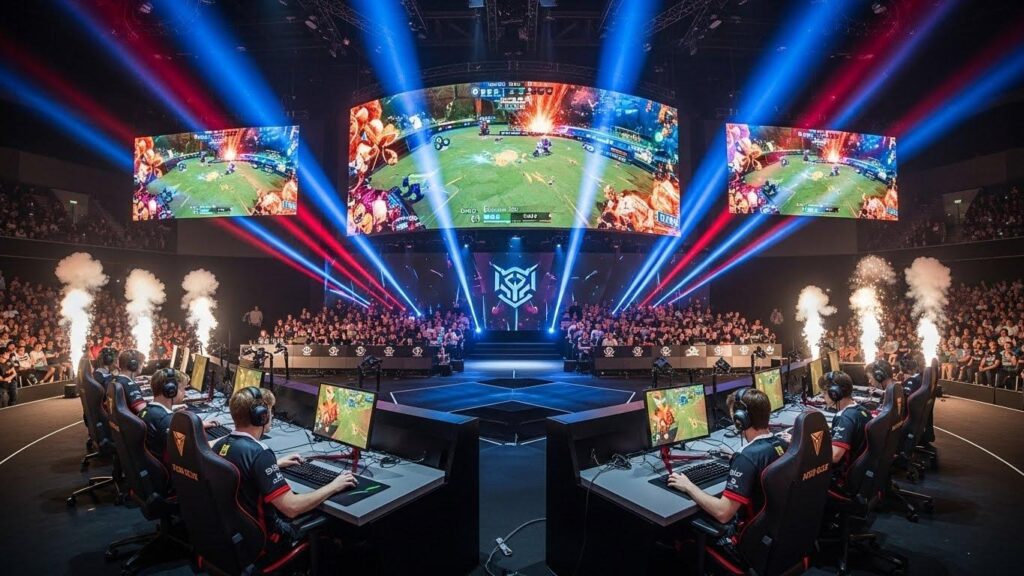
The gaming industry and esports have developed significantly in recent years, transforming from a niche hobby into a large ecosystem with an audience of millions. Tournaments have played a major role in this development, creating a competitive environment for players, teams and spectators. They are responsible for establishing a stable competition calendar, transparent rules, and a clear hierarchy of skill levels. In this article, we will discuss how structured online tournaments stimulate the development of digital sports and why they are an important part of modern esports.
Contents
The Role of Structured Competition in Digital Sports
Esports competitions were not always professional; when the industry first emerged, they were simply competitions between enthusiasts. Organised online tournaments gave digital sports what it had long lacked: consistency. Unlike regular matches or local competitions, structured tournaments have clear rules, regulations, an understandable grid, a qualification system, and a division by team level. This creates a competitive environment where the result depends not on chance, but on preparation, tactics, and consistency.
An important factor is the rating systems, which allow players to track their progress. In popular disciplines such as CS2 or Dota 2, the tournament scene is closely linked to ratings, as they influence invitations, seeding, and team status. Taking an example from dota 2 events, we can see that the improvement in player skill is directly linked to the development of the esports ecosystem. Statistical platforms allow players to track their performance, identify mistakes and make adjustments to their game.
In addition, structured tournaments form a long-term motivation for players. The presence of seasons, professional and amateur leagues and regular major events makes it possible to plan the training process and career. For young teams, this is a chance to gradually climb the eSports ladder, and for fans – the opportunity to root for their favorite teams.
Accessibility and Global Reach of Online Tournaments
Another reason for the growth of digital sports is the accessibility of online tournaments. To participate, you don’t need to travel to other cities or countries; all you need is high-quality devices, stable internet, and a team. This allows teams of all levels and regions to compete in major international tournaments. This significantly expands the geography of esports and attracts new regions that were previously outside the global scene.
Global coverage also has a positive impact on the diversity of playing styles. Teams from different countries bring their own approaches to tactics and gameplay, making tournaments more interesting and unpredictable. For digital sports, this means constant development and no stagnation, as the meta is constantly changing under the influence of new ideas.
The online format simplifies the integration of amateurs into the professional environment. The main tournament platforms offer open qualifications for major tournaments, where anyone can try their hand. This model increases the reach of the industry, motivates players to improve skills and reduces the barrier to entry into eSports. As a result, a wide base of players is formed, from which new professionals grow, which ensures the sustainable growth of digital sports.
Economic Impact and Ecosystem Development

Organised online tournaments have a significant economic impact on the industry. They attract sponsors, advertisers and investors who see esports as a stable and promising platform for promoting brands. In addition, tournaments often have substantial prize pools, which motivates players to try harder. Regular tournaments with a clear audience allow for the development of long-term business strategies rather than one-off advertising campaigns.
In addition to direct investment, the tournament ecosystem creates jobs. An important role in the eSports ecosystem is played by analysts, commentators, team managers, organizers and technical specialists. Each of them has its own role and contributes to the development of the industry. The online format simplifies the scaling of projects and reduces logistics costs, which makes eSports more economically attractive compared to traditional sports.
It is also important that structured tournaments stimulate the development of related services: statistical platforms, streaming services, analytical tools. Without this, it is difficult to imagine a modern tournament and all this in a heap increases the transparency and convenience of digital sports. These elements also make eSports more understandable for new viewers, which directly affects audience growth and commercial success.
Community Engagement and Long-Term Growth
Without an active community, no sport can develop, including digital sports. Tournaments create permanent points of interaction between players, fans and organisers. Fans support their favourite teams in arenas, broadcasts, social networks and even form fan communities. All this creates a lively ecosystem around tournaments, where matches, strategies and news from the scene are discussed.
The regularity of the competition plays a key role in long-term growth. When the audience knows that tournaments take place on a stable schedule, a habit of consuming content is formed. This increases the loyalty of viewers and strengthens the position of e-sports in the media space, competing with traditional sports events.
In addition to the above factors, online tournaments contribute to the formation of stories and narratives. Just as in traditional sports there is a confrontation between the team, the ups and downs of the newcomers and the favorites – all this creates an emotional connection with the audience. Such stories are interesting to fans and make eSports a full-fledged spectacle with its own culture and values.
Conclusion
Putting all the facts together, we can say that online tournaments have become an important part of digital sports and contribute to its development. They ensure the consistency, accessibility and economic stability of the industry. In addition, they have opened up global opportunities for players, created a transparent competitive environment, and attracted millions of viewers around the world. Thanks to its clear structure, regular tournaments, and active community, digital sports continue to develop, cementing their status as a leader in the gaming industry and one of the most dynamic areas of modern entertainment.