Table of Contents
ToggleHow to Read Specifications in a Buying Guide matters when a product’s spec sheet decides whether it will actually solve a real problem in the home. This guide gives clear, practical rules for reading specs on vacuums and related home cleaners. It opens with the six specs buyers should prioritize, explains what each number really means, and shows how to match those numbers to floors, pets, and allergy needs. Readers leave knowing which figures to trust, which to test in person, and which marketing claims to ignore.
Key Takeaways
- Prioritize six key specifications—performance, battery, filters, size/weight/noise/capacity, control cleaning effectiveness, and ownership cost—when reading a buying guide.
- Match the primary specifications, especially air watts and battery watt-hours, to your home environment, floor types, and pet or allergy needs for the best vacuum choice.
- Avoid relying on wattage alone, as it indicates electrical draw, not cleaning power; focus instead on air watts and real-world battery runtime.
- Use practical tactics like noting air watts and bin capacity, and converting battery mAh to watt-hours to accurately compare models and ownership costs.
- Look for certified HEPA filters for effective filtration and consider realistic measures of weight, noise, and capacity to ensure comfort and usability.
- Evaluate total three-year maintenance costs and power mode settings to make confident purchasing decisions based on comprehensive spec analysis.
The Six Specs To Prioritize And How They Affect Your Purchase
Fact first: six specifications, performance, battery, filters, size/weight/noise/capacity, control cleaning effectiveness and ownership cost. Buyers who map these six to their home save time, money, and frustration.
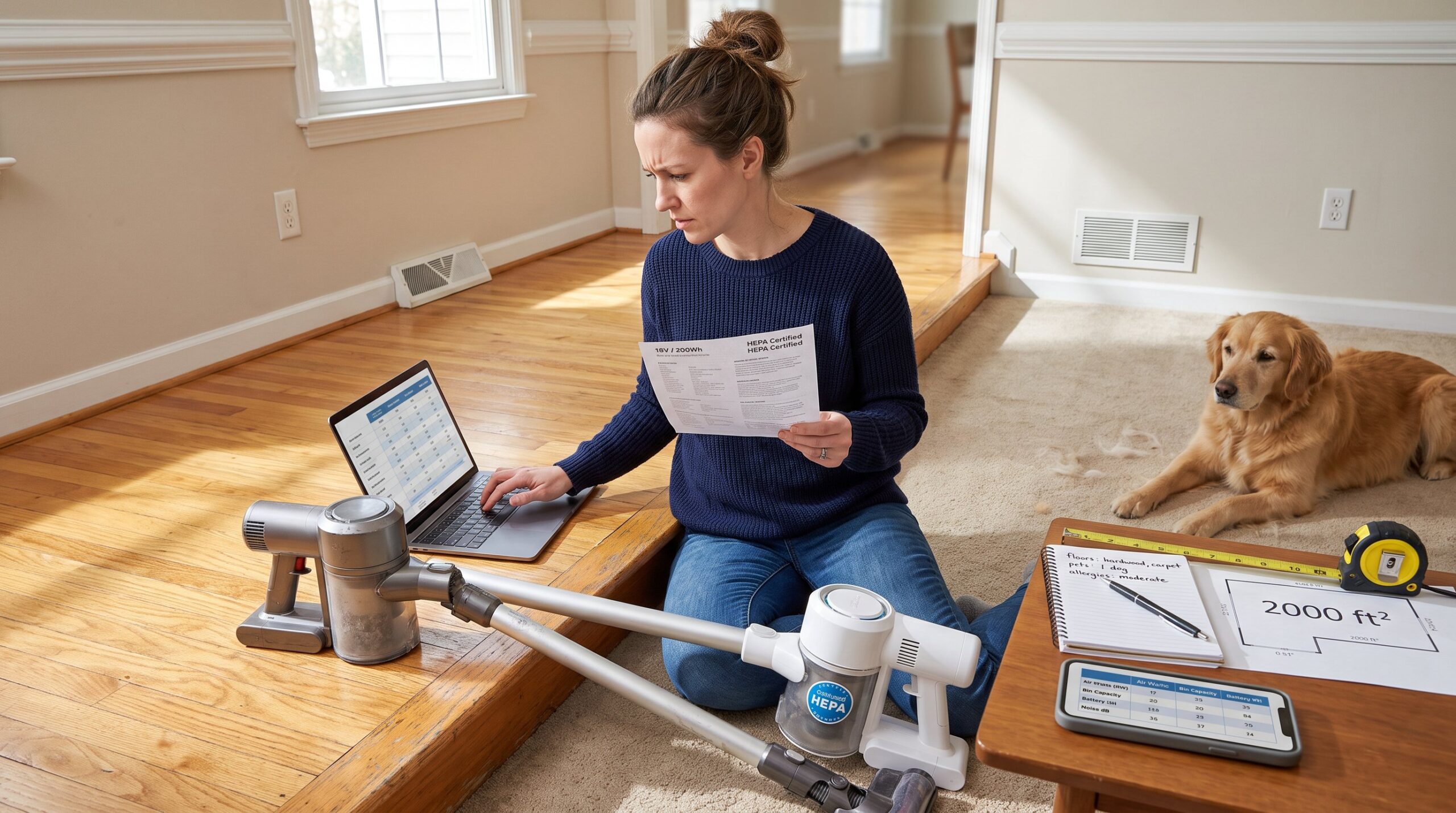
Start with a quick checklist: what floors exist, how many pets live there, whether allergies are a concern, and where the vacuum will be stored. Those answers determine which spec bands matter. For example, a 2,000 ft² house with dogs needs higher dust capacity and stronger carpet performance than a 600 ft² apartment with mostly hard floors.
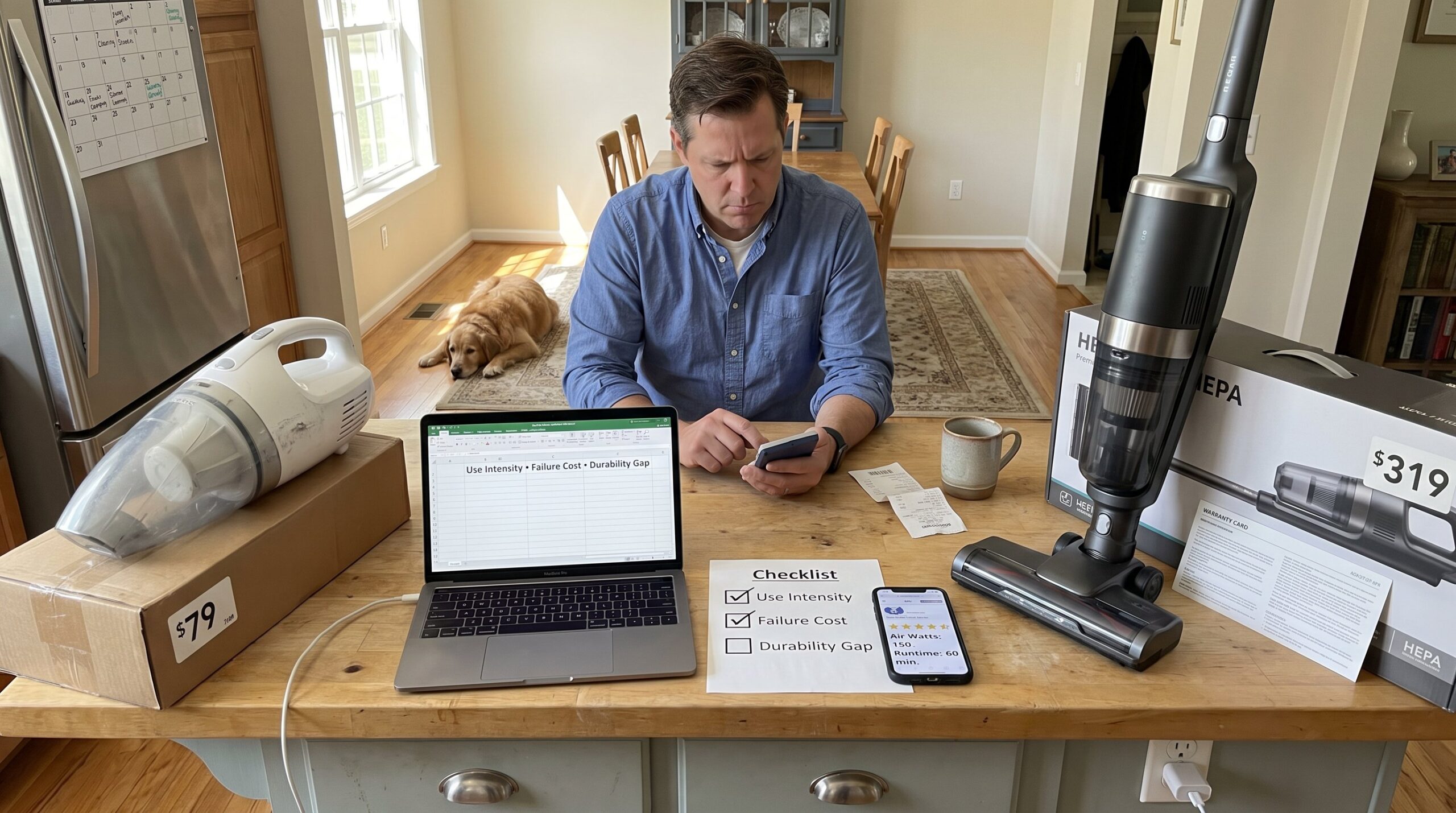
A common mistake is trusting a single high number on the box. Wattage, for instance, often confuses buyers. Watts show electrical draw, not cleaning power. The more useful single metrics are air watts for cleaning and battery watt-hours for runtime. Buyers who pair those numbers with real-world tests avoid disappointment.
Practical link: when readers want a step-by-step approach to weighing these trade-offs, a short primer on a buying guides overview helps place specs in a purchase framework. For a fuller overview, see the resource guide.
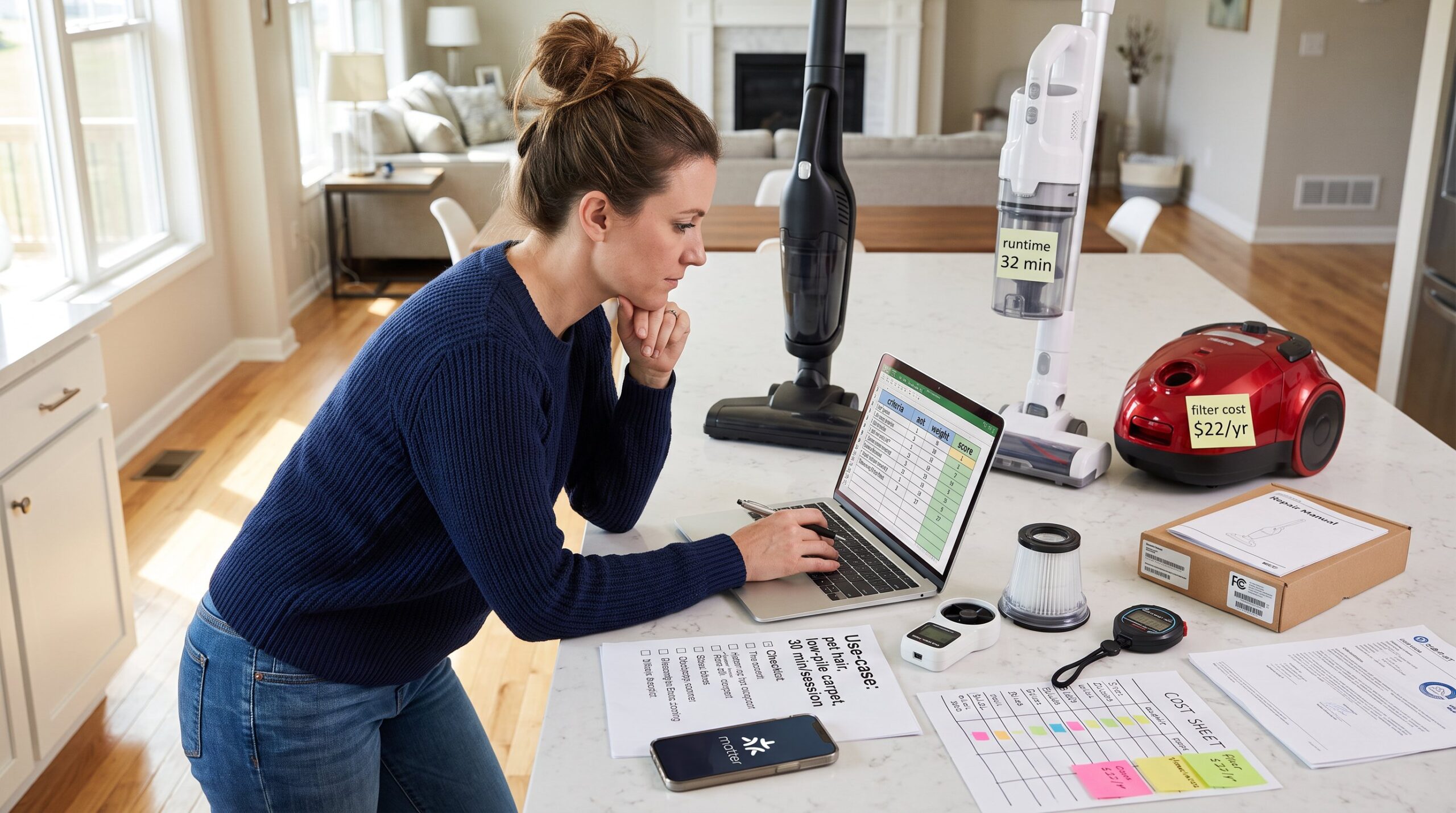
Two quick tactics to use while comparing: 1) write down the AW and bin capacity for each model, and 2) convert battery mAh to Wh when possible (Wh = volts × Ah) so runtimes compare apples-to-apples. These actions reveal hidden ownership costs like frequent filter replacements or short real-world runtimes.
Conclusion
Takeaway: treat specifications as data points to match against living conditions, floor type, pets, allergy needs, and storage. Prioritize air watts for cleaning, watt-hours for battery comparisons, certified HEPA for filtration, and realistic measures for weight, noise, and capacity. Small but critical actions, converting Wh, noting the power mode for runtime, and totaling three-year maintenance costs, turn confusing spec sheets into confident purchases.