Table of Contents
ToggleUnderstanding Affiliate Links in Online Buying Guides explains how tracking URLs change recommendations and why readers should pay attention. In 2026, affiliate links remain the primary way many buying guides earn income. This piece gives clear actions: how affiliate links work, where incentives can skew advice, how to check a guide’s trustworthiness, and simple steps to protect purchases. Readers will get a practical checklist and concrete examples tied to livingpristine.com buying guidance so they can shop with more confidence.
Contents
Key Takeaways
- Affiliate links are unique tracking URLs that allow buying guides to earn commissions supporting their content and testing efforts.
- While affiliate links enable free, performance-based monetization, they can bias guides to favor products with higher commissions or affiliate programs.
- Trustworthy buying guides clearly disclose affiliate relationships, provide balanced pros and cons, and explain their testing or selection methodology.
- Use a practical checklist to evaluate guides quickly: look for visible disclosures, honest product assessments, inclusion of non-affiliate options, updated content, and transparent scoring criteria.
- Protect yourself by comparing prices on merchant sites, reviewing independent product tests, and managing cookies or privacy settings to limit tracking.
- Understanding affiliate links helps shoppers make confident, informed purchases by recognizing potential biases and seeking transparent, evidence-based guidance.
What Affiliate Links Are And How They Work
Fact first: Affiliate links are unique tracking URLs that credit a publisher when a reader completes a purchase or signup. They use tracking parameters and cookies to pass an identifier to the merchant. If the buyer completes the transaction within the program’s attribution window (for example, 24 hours on many retail programs), the publisher gets a commission.
How it happens step by step: a site embeds a link with a code. The reader clicks. The merchant’s cookie stores the code. The visitor buys. The system matches the sale to the code and records a commission. Technical details matter: some programs use server-side tracking or first-party cookies to avoid cookie loss: others rely on JavaScript-based redirects.
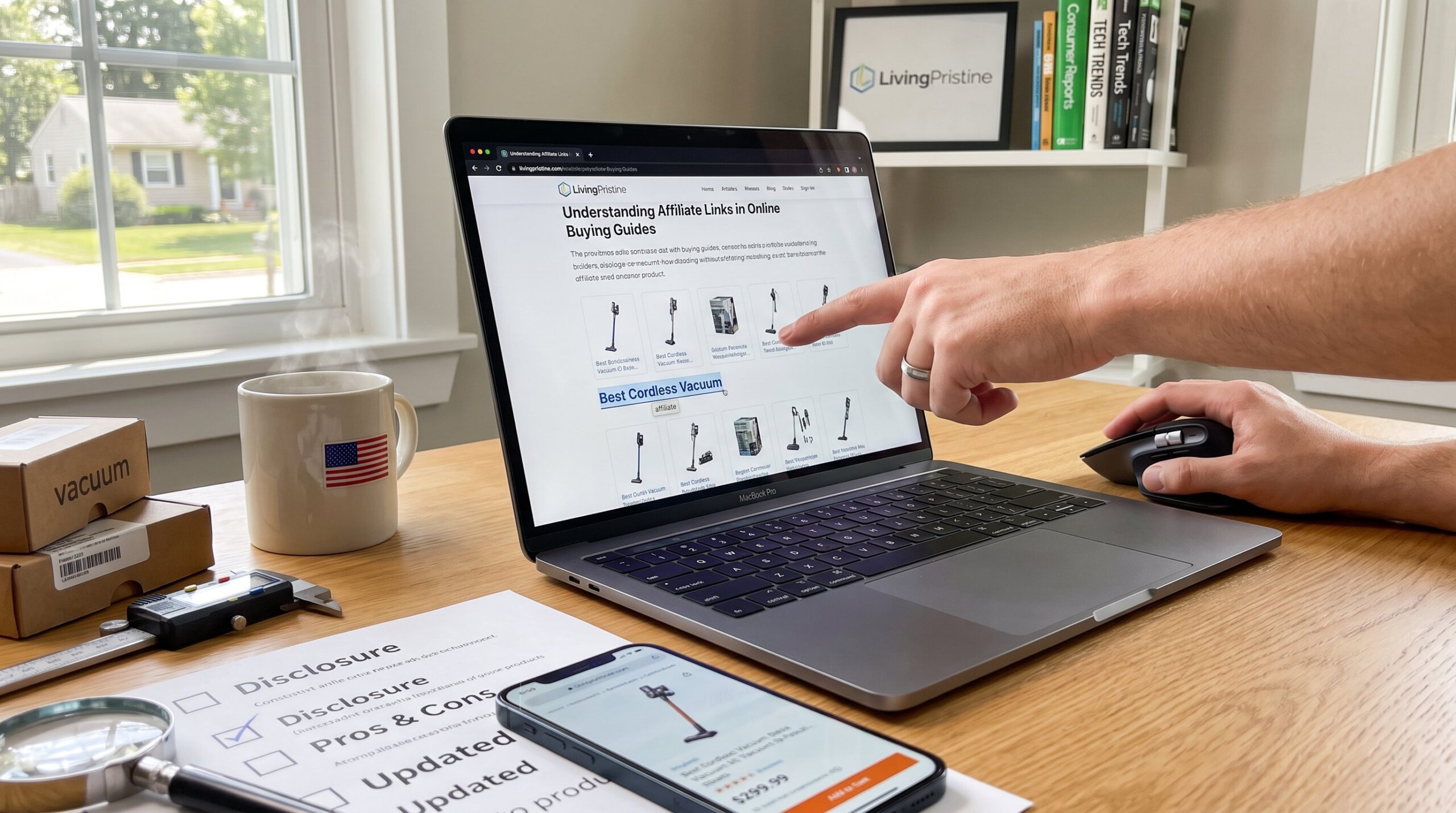
Concrete example: a reviewer links to a vacuum model through an affiliate URL. The reader buys the vacuum two hours later: the cookie still counts the sale. That commission supports the reviewer’s site hosting, product testing, and salaries. LivingPristine’s model uses similar tracking to fund buying guides and testing infrastructure.
Why this matters: tracking alters incentives. It does not automatically mean false claims, but readers should understand the mechanism. Affiliate links can make specialized content financially viable, while also introducing an incentive to favor products with affiliate programs.
Why Buying Guides Use Affiliate Links — Benefits And Potential Conflicts
Fact first: Buying guides use affiliate links because they enable performance-based monetization, publishers earn only when a sale happens. This keeps most content free to readers while covering costs like lab testing, expert time, and site maintenance.
Benefits in practice: affiliate revenue lets a team buy test units (e.g., 12 vacuum models for hands-on comparison), pay writers, and continuously update guides. For example, a guide that lists price-performance across models can be maintained weekly with revenue from conversions.
Clear conflicts arise: guides may prioritize higher-commission products, favor brands that offer affiliate programs, or accept sponsored placements that push visibility. An editor might list brand A first because it pays 8% while brand B pays 2%, even if B performs better in testing. That’s the core bias risk.
Concrete numbers: if a guide sends 2,847 buyers monthly and earns a 5% average commission on $200 items, that’s roughly $28,470 per year, enough to sustain several staff. That financial reality nudges choices.
Balance and solutions: reputable publications disclose affiliate relationships, publish testing methods, and include non-affiliate options. LivingPristine operates within that model and links readers to practical guidance on comparing products in a structured way.
How To Evaluate Bias And Trustworthiness In Guides
Fact first: Trustworthy guides show clear disclosures, balanced pros and cons, and a transparent selection or testing methodology. Readers should look for specific signals rather than vague language.
Signals to spot quickly:
- Disclosure placement: a clear affiliate disclosure appears near the top of the page, not buried at the footer, and states that clicks may earn commissions.
- Balanced coverage: each product lists both strengths and weaknesses, not only superlatives.
- Methodology detail: the guide explains how products were selected, tested, or scored, including data points like runtime, suction power, or measured noise levels.
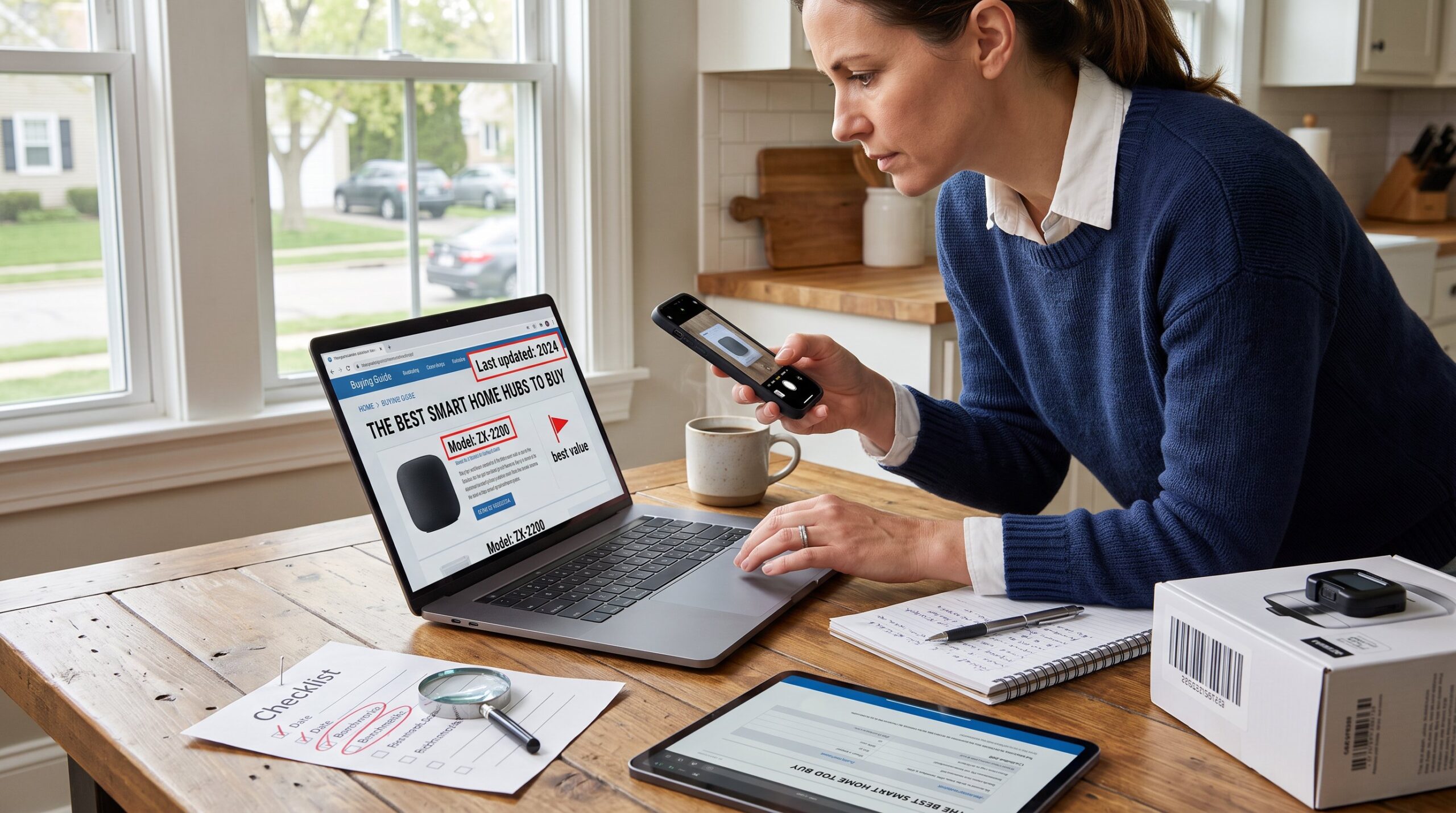
Real-world red flags: every item rated “best” across categories, missing non-affiliate alternatives, or absence of update dates. These suggest selection was driven more by partnerships than performance.
Contextual tip: regulators like the FTC require disclosure of material connections in the United States, so lack of transparency can be both a trust and compliance concern.
Related resource: readers wanting step-by-step buying guidance can use an in-depth primer on comparing products in buying guides to cross-check a site’s claims and choices: product comparison primer.
A Practical Checklist To Spot Reliable Recommendations
Fact first: A short checklist helps evaluate a guide in under two minutes. Use these exact items when scanning any online buying guide.
Checklist (use each item as a quick test):
- Visible affiliate disclosure near the top of the article.
- Clear pros and cons section for every product, with at least one downside listed.
- At least one non-affiliate product included or acknowledged as a strong alternative.
- Updated timestamp and notes on corrections or discontinued models.
- Explicit scoring or ranking criteria described (e.g., weight=30% testing results, 20% value, 50% reliability).
Example application: a vacuum buying guide that lists noise in dB, measured suction in Pascals, and battery runtime in minutes shows evidence-based testing. If the same guide highlights a cheaper model without an affiliate link, trust increases.
Small warning: some sites list testing metrics but fail to show raw data. Requesting or finding the raw test data, photos, spreadsheets, or video, strengthens confidence. Trusted reviewers often publish test protocols or link to methods pages for transparency.
How To Protect Yourself When Purchasing Through Affiliate Links
Fact first: Buyers protect themselves by verifying price, reading independent reviews, and limiting tracking where desired.
Actionable steps readers can take immediately:
- Compare prices: open merchant pages directly and compare prices across retailers before clicking any buy button. Sometimes affiliate links use tracked landing pages that show different promotions.
- Cross-check technical specs: read manufacturer specs and at least two independent reviews that disclose testing methods. For product-testing standards, readers can reference established review processes like those described by major review labs.
- Treat urgency claims cautiously: exclusive bonuses or “only through this link” offers tied to affiliate links can be legitimate promotions but sometimes pressure buyers into hasty choices.
- Clear cookies or use privacy settings: to limit tracking, clear browsing cookies or use a privacy-preserving browser: this won’t stop commissions but reduces cross-site profiling.
Practical example: a shopper compares a Shark vacuum listed on a buying guide to the manufacturer’s spec sheet, reads two independent lab tests, then purchases when satisfied. That three-step check prevents impulse buys based solely on placement in a guide.
Additional help: LivingPristine provides how-to support for reading specs and comparing premium vs. budget choices in other resources: readers can consult short guides for stepwise checks such as how to read specifications and budget vs premium.
Conclusion
Insight: Affiliate links are a neutral tool that funds many buying guides but also creates incentives. Readers who check disclosures, ask for data, and use the checklist reduce bias risk and make better purchases.
A last honest note: reviewers sometimes miss product flaws, testing is costly and imperfect. When a guide lists measurable test data, readers can weigh that evidence. When it does not, trust cautiously.