Table of Contents
ToggleUnleashing the power of LivingPristine shows how people improve cleanliness and health in rooms and vehicles. The guide shows what LivingPristine is, how LivingPristine works, and how people use LivingPristine daily. The guide lists features, safe steps, and measurements. The guide helps readers choose, apply, and keep cleaner spaces with LivingPristine tools and habits.
Contents
Key Takeaways
- LivingPristine offers a low-toxicity cleaning approach using concentrated, surface-safe, and scent-free products to reduce irritants and promote healthier environments.
- The brand emphasizes clear labeling with active ingredients, dilution rates, and hazard icons to guide safe, effective, and repeatable cleaning routines.
- LivingPristine products help reduce chemical waste with refill pouches and recyclable packaging, supporting sustainable and cost-efficient cleaning habits.
- Its color-coded bottles and step-by-step instructions simplify training and usage, making it ideal for homes, workplaces, and travel.
- Integrating LivingPristine involves replacing multiple cleaners with a core set, establishing clear task lists, and consistently logging usage to improve routine efficiency.
- Organizations measure impact by tracking product use, incident reports, and costs to scale sustainable cleaning and reduce waste over time.
What LivingPristine Is And Why It Matters Today
LivingPristine is a branded cleaning approach that focuses on low-toxicity products, clear labeling, and repeatable routines. It combines concentrated cleaners, surface-safe formulations, and scent-free options. Consumers choose LivingPristine when they want fewer irritants, predictable results, and clearer ingredient lists. Studies show safer products reduce allergy triggers and surface residues, and consumers report fewer headaches and skin reactions when they switch to milder formulas.
Retailers sell LivingPristine products in spray, wipes, and concentrated refill packs. Facility managers use LivingPristine to reduce chemical waste and simplify staff training. Cleaning staff follow step-by-step instructions that LivingPristine provides on labels and inserts. The label language guides safe dilution, contact time, and surface compatibility. Companies that adopt LivingPristine see simpler procurement and clearer safety data sheets, and they can measure supply use more easily.
Core Features, Ingredients, And Key Benefits
LivingPristine lists active ingredients, percent concentration, and hazard icons on each pack. Common actives include hydrogen peroxide, citric acid, and non-ionic surfactants. LivingPristine avoids strong ammonia and harsh alkalis in many formulas. The labels include dilution rates and contact times. The packaging uses refill pouches to cut single-use plastic and to lower shipping weight.
LivingPristine promises three benefits. First, LivingPristine reduces skin and respiratory irritation by lowering harsh chemical content. Second, LivingPristine reduces waste through concentrated refills and recyclable materials. Third, LivingPristine simplifies routines with color-coded bottles and clear step labels. Teams adopt these cues to keep training short and reduce mistakes.
Practical Use Cases: Home, Workplace, And Travel
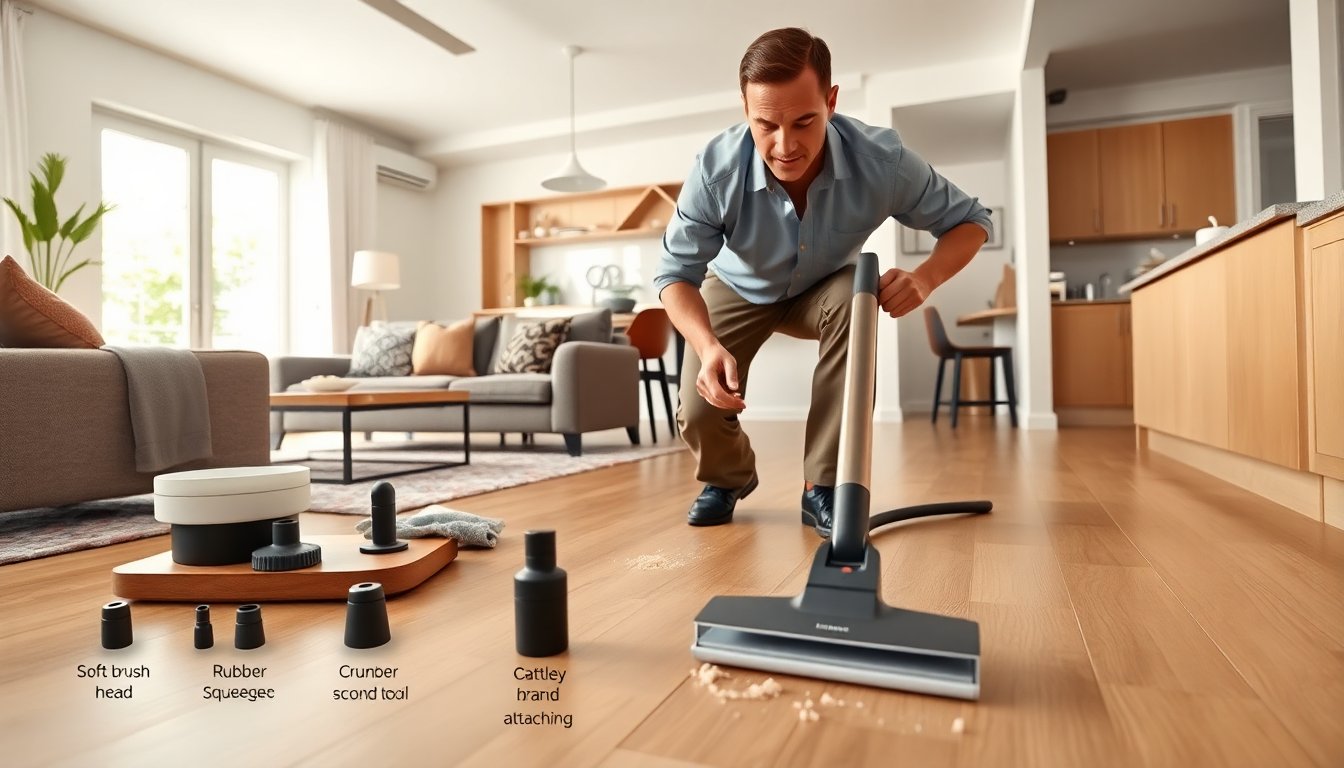
At home, parents use LivingPristine on high-touch surfaces and on kitchen counters. They dilute concentrates to match surface needs and they store diluted mixes in labeled spray bottles. In workplaces, custodial teams standardize on two or three LivingPristine formulas. Teams assign colors to task lists and they track usage per square foot. For travel, consumers carry single-dose LivingPristine wipes or small spray bottles to clean trays, armrests, and phone screens. Consumers find the compact formats fit luggage and cut time spent searching for safe cleaners.
How To Get Started: Buying, Safe Use, And Routine Integration
They buy LivingPristine products from online stores, local retailers, or subscription services. Buyers read the label and the Safety Data Sheet before purchase. They check active ingredient lists and dilution instructions. Buyers choose scent-free or low-scent options when people in the space have sensitivities.
They follow three steps for safe use. Step one: read the product label and Safety Data Sheet. Step two: mix concentrates in measured containers and label them with date and dilution ratio. Step three: store mixed solutions away from children and food. Workers wear gloves when they handle concentrates and they use eye protection for high-concentration mixes.
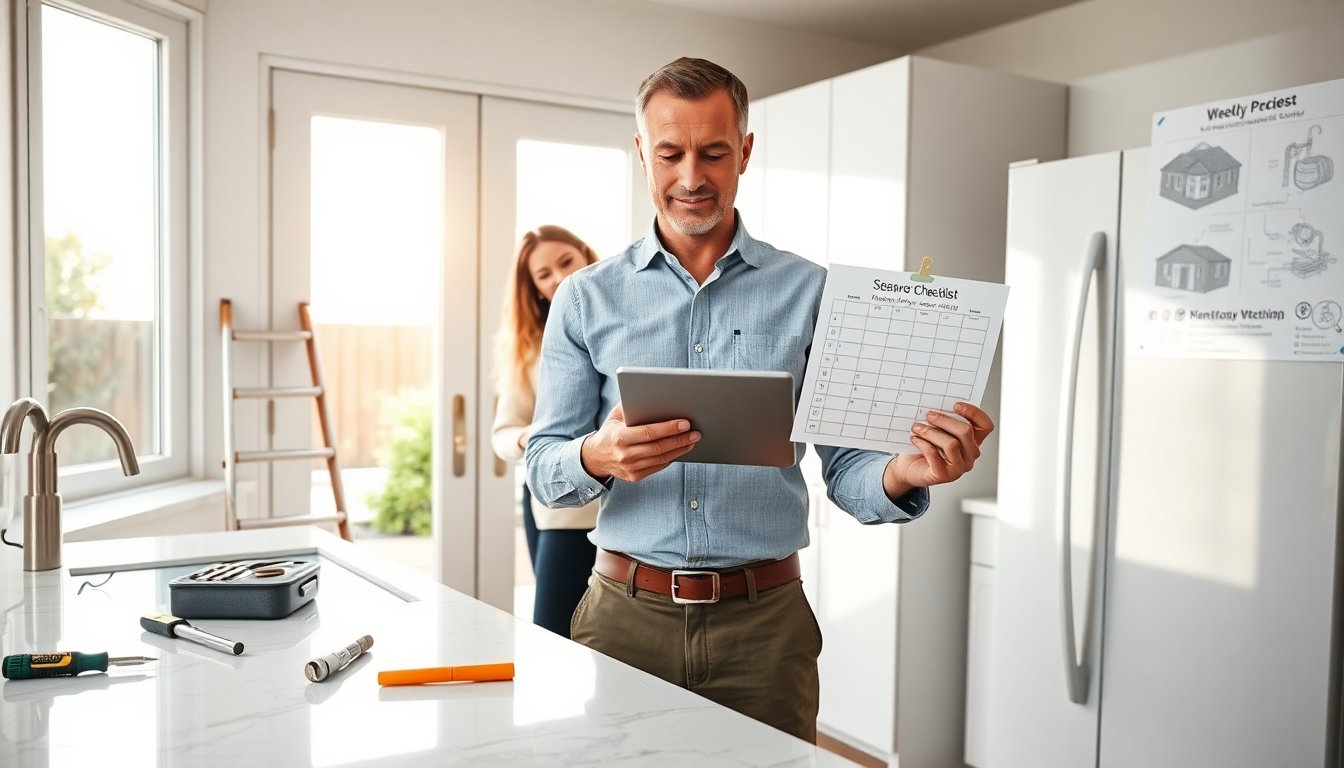
They integrate LivingPristine into routines by replacing multiple cleaners with one small set. Managers build short task lists that name surfaces, cleaner color, and contact time. Staff check a simple chart before each shift and log completed tasks. Families set a weekly schedule that assigns quick surface wipes to weekdays and deeper cleaning to weekends. These steps cut decision time and increase consistency.
Measuring Impact And Scaling Sustainable Cleaning Habits
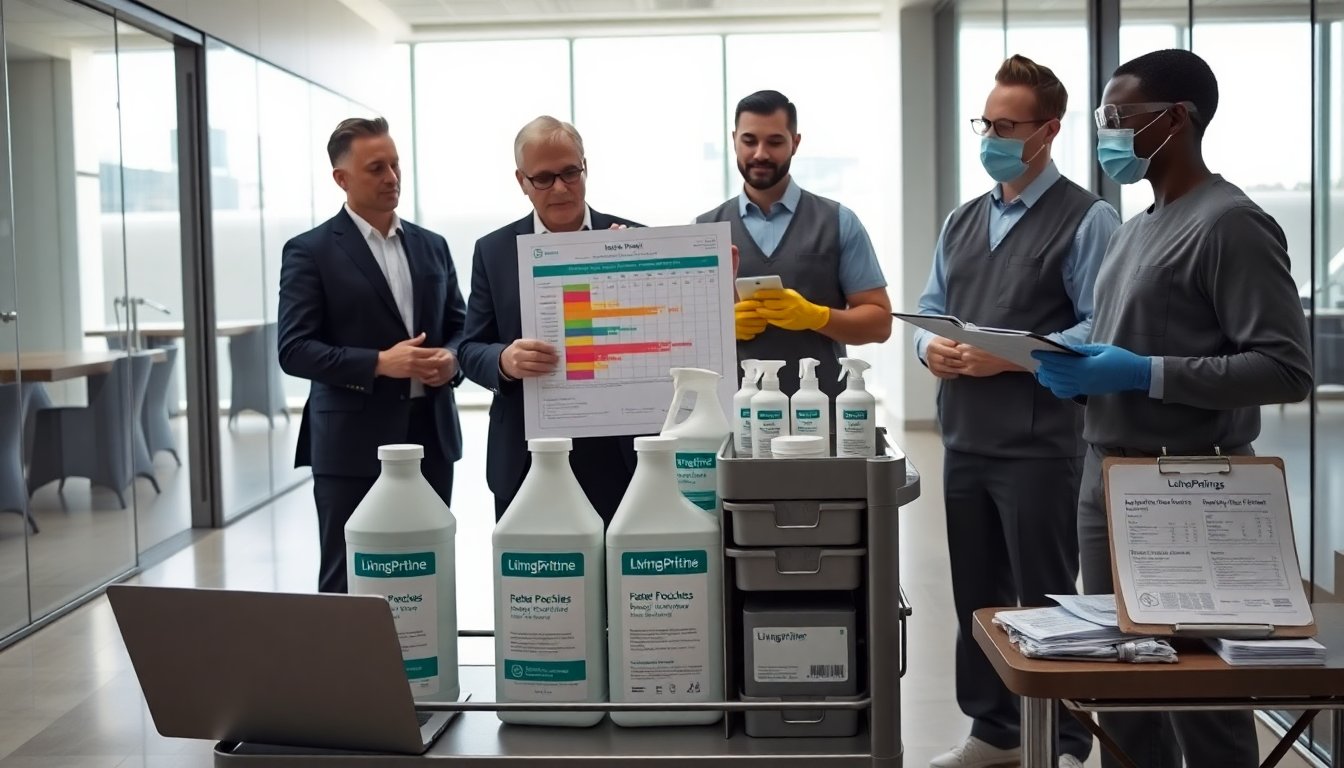
They measure impact with simple metrics. Teams log product use per area, record incident reports, and track absentee days related to respiratory or skin issues. Managers chart product spend and waste volume monthly. They compare data before and after a LivingPristine rollout to see trends in supply cost and reported reactions.
They scale habits by training new hires using short demonstrations and by keeping labels visible. Leaders link cleanliness goals to staff incentives and to regular check-ins. Organizations use audits to confirm steps and to correct gaps. The same leadership habits that move teams forward in sport and business can help cleaning teams adopt new practices: a noted leadership philosophy interview highlights how consistent coaching and clear expectations change team behavior.
They reduce supply waste by ordering concentrates and using refill stations. They set review points every quarter to remove unnecessary items and to add items that save time. Over months, teams see steady drops in single-use products and in total product spend. Customers who track these numbers find cleaner spaces with lower cost and less waste.